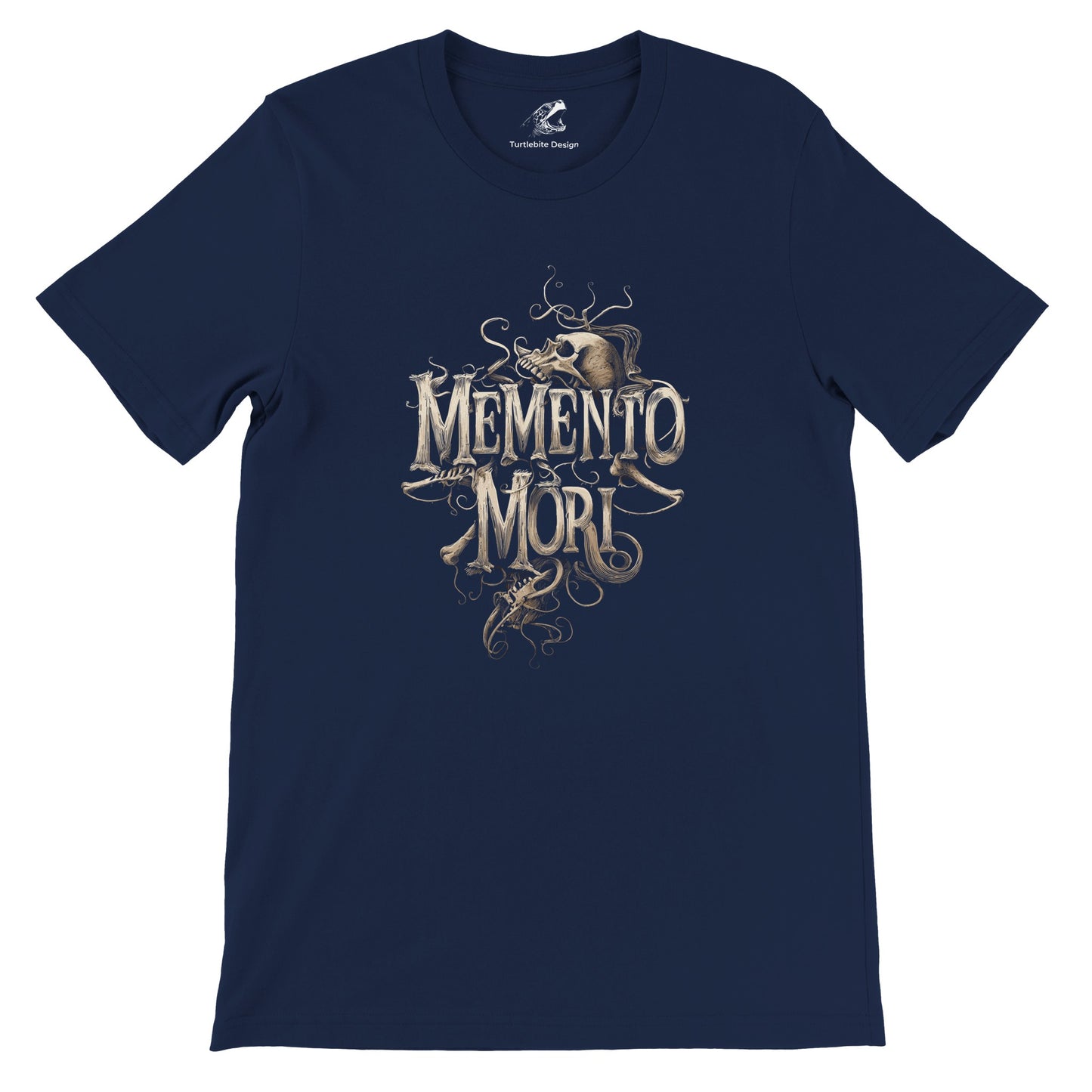

What Does Memento Mori Mean? A 2000-Year History of Death, Philosophy, and Dark Art
ChristianMemento mori is a Latin phrase that translates to "remember that you must die." It is an artistic and philosophical concept built on a single, uncomfortable truth: you are mortal, your time is limited, and pretending otherwise is both dishonest and, according to the Stoics, a waste of a perfectly good life. The phrase has been used for roughly 2,000 years, across Roman triumphs, medieval monasteries, Dutch oil paintings, and, yes, gothic wall art. It is one of those ideas that refuses to stay dead (pun very much intended).
In this article
- What does memento mori mean in Latin?
- Where did memento mori come from?
- Is memento mori a positive or negative thing?
- How did memento mori become an art movement?
- What are the key symbols in memento mori art?
- What is the difference between memento mori and memento vivere?
- Is memento mori Catholic or Stoic?
- Frequently asked questions
What does memento mori mean in Latin?
The phrase breaks down cleanly: memento is the imperative form of meminisse, meaning "remember," and mori is the infinitive of "to die." Together: "Remember to die," or more naturally rendered, "Remember that you must die." It is not a threat. It is a reminder. Whether you find that comforting or unsettling says a lot about your relationship with mortality and possibly your interior design choices.
The phrase is sometimes confused with carpe diem, which translates to "seize the day." They are related but distinct. Carpe diem is about action; memento mori is about awareness. One tells you what to do. The other tells you why you should bother doing it.

Where did memento mori come from?
The most vivid origin story comes from ancient Rome. When a victorious general returned from battle and paraded through the city in triumph, a slave or public servant rode alongside him in the chariot. The servant's job, during this peak moment of public glory, was to lean over and whisper "Memento mori" in the general's ear. Repeatedly. The purpose was humility: a reminder that fame, power, and military victory were temporary, and that the man being cheered was still just a man.
The Stoic philosophers formalized the practice. Marcus Aurelius wrote extensively about meditating on death in his Meditations, arguing that confronting mortality strips away trivial concerns and sharpens your focus on what actually matters. Seneca said it more bluntly: "Let us prepare our minds as if we had come to the very end of life. Let us postpone nothing." Epictetus agreed. The Stoics, as a group, were not a cheerful bunch, but they had a point.
The Catholic Church picked up the concept during the Middle Ages and integrated it into Christian devotional practice. Monks used skull imagery in their cells to stay focused on the eternal soul over earthly pleasure. The phrase "memento homo quia pulvis es et in pulverem reverteris" from the Book of Genesis ("Remember, man, that you are dust and to dust you shall return") reflects the same thinking. The Church essentially gave memento mori a theological framework: remember death so you live righteously, not just intentionally.

Wilting flowers on wall art. The 17th-century Dutch painters would approve.
Is memento mori a positive or negative thing?
Neither, really. It is clarifying. The philosophy argues that awareness of death is not depressing; it is focusing. If you genuinely understand that your time is finite, you stop spending it on things that don't matter to you. You stop postponing the conversation, the trip, the creative project, the change. The Stoics used memento mori as a daily mental practice, not as a way to be sad, but as a way to stay awake to what their lives actually were.
Modern psychology has arrived at a similar conclusion through a very different route. Terror Management Theory, developed by researchers in the 1980s, suggests that awareness of death actually motivates people to invest more in the things they find meaningful. Thinking about mortality can make you a better friend, a more present partner, and a more intentional person. Basically: the skull on your wall might be doing you a favor. :)
How did memento mori become an art movement?
The visual tradition took hold especially in the 16th and 17th centuries, when Dutch and Flemish painters turned mortality into a genre. Vanitas paintings, a direct descendant of the memento mori tradition, depicted elaborate still lifes packed with symbolic objects: skulls next to wine goblets, hourglasses next to books, fresh flowers pressed against rotting ones. The message was consistent across all of them: this beauty is temporary, this abundance is temporary, you are temporary.
Skulls appeared in portrait paintings as subtle inclusions, sitting on desks or held in the subject's hand. Holbein's The Ambassadors (1533) contains one of the most famous examples: an anamorphic skull stretched across the bottom of the canvas, only recognizable from an angle. It reads as a reminder hidden in plain sight, which is arguably the most memento mori way to include a memento mori.
She refused to let death cramp her style. Victorian dress, skeletal form, complete contempt for the concept of "too much." A proper memento mori piece for the wall.
What are the key symbols in memento mori art?
Memento mori art developed a consistent visual language across several centuries. Once you know the symbols, you start seeing them everywhere. Here is what the major ones mean:
| Symbol | What it represents |
|---|---|
| Skull or skeleton | The most direct: what all physical bodies eventually become |
| Hourglass or clock | Time is finite, running out, and does not pause while you procrastinate |
| Wilting flowers | Beauty is temporary; even at peak bloom, the end is already underway |
| Snuffed or guttering candle | A life spent; the flame is out |
| Rotting fruit | Abundance does not last; decay follows plenty |
| Soap bubbles | Fragility of life; here for a moment, gone without warning |

The most universally legible memento mori symbol, rendered in moody oil-painting style. The 17th century would recognize this immediately. Available up to A0.
What is the difference between memento mori and memento vivere?
Memento vivere translates to "remember to live." It is the companion phrase, and together the two create a loop: one reminds you that you will die, the other reminds you to do something meaningful with the time in between. Some philosophers and writers treat them as equally important. Memento mori gives the urgency; memento vivere gives the direction.
Think of it as the world's oldest and most skull-heavy self-help framework. Less "live laugh love," more "you have a finite number of days and here is how to actually use them." The aesthetic is considerably better, too.
Is memento mori a Catholic or Stoic thing?
Both. The Stoics developed the practice first, using it as a secular philosophical exercise. The Catholic Church integrated it into Christian theology, giving it a spiritual dimension: contemplate death to resist earthly temptation and prepare the soul for judgment. Medieval monks kept skulls in their cells. Ash Wednesday, which begins with the words "Remember that you are dust, and to dust you shall return," is a direct continuation of the tradition.
Today the phrase is largely secular again, primarily associated with Stoicism, philosophy, and the broader understanding that awareness of mortality leads to better living. It has also, inevitably, landed on a significant amount of gothic wall art, which seems entirely appropriate given the company it has kept for the past two millennia.
Frequently asked questions
Is memento mori a positive thing?
Yes, in the sense that it is meant to be useful rather than depressing. The Stoics used it to strip away trivial concerns and focus on what actually matters. Modern psychology supports the idea that awareness of mortality can motivate people to live more intentionally. It is not a morbid obsession with death; it is a tool for prioritizing life.
What is the opposite of memento mori?
The most direct counterpart is memento vivere ("remember to live"). Philosophically, the opposite concept would be something like willful denial of death: the refusal to acknowledge mortality as a fact. The Stoics considered that approach not only dishonest but actively harmful to the quality of a life.
What does memento mori mean in a tattoo?
In tattoo culture, memento mori typically functions as both a philosophical statement and an aesthetic one. People get the phrase or associated imagery (skulls, hourglasses, wilting flowers) as a permanent reminder to stay focused on what matters, to not waste time, and to accept mortality rather than deny it. It is one of the more coherent things to have tattooed on your body, philosophically speaking.
Is memento mori the same as vanitas?
Vanitas is a subgenre of memento mori art, not a synonym. While memento mori is the broader philosophical and artistic tradition, vanitas refers specifically to 17th-century Dutch and Flemish still-life paintings packed with mortality symbols. All vanitas paintings are memento mori; not all memento mori art is vanitas.
How do you pronounce memento mori?
In classical Latin: "meh-MEN-toh MOR-ee." In modern English usage it is commonly pronounced "muh-MEN-toh MOR-ee." Either way, the person you say it to will know exactly what you mean, and possibly update their opinion of you accordingly.

For when you want to carry the philosophy on your person. Cracked skull, bleeding paint drips, and the quiet confidence of someone who has made peace with impermanence.
Bring the Philosophy Home
Turtlebite makes memento mori art for walls and wardrobes. Printed near you, shipped worldwide. 4.94 stars across 272 verified reviews.
Browse the Collection →Fast worldwide shipping. Produced locally near you.