
The Void, But Make It Cozy
ChristianShare
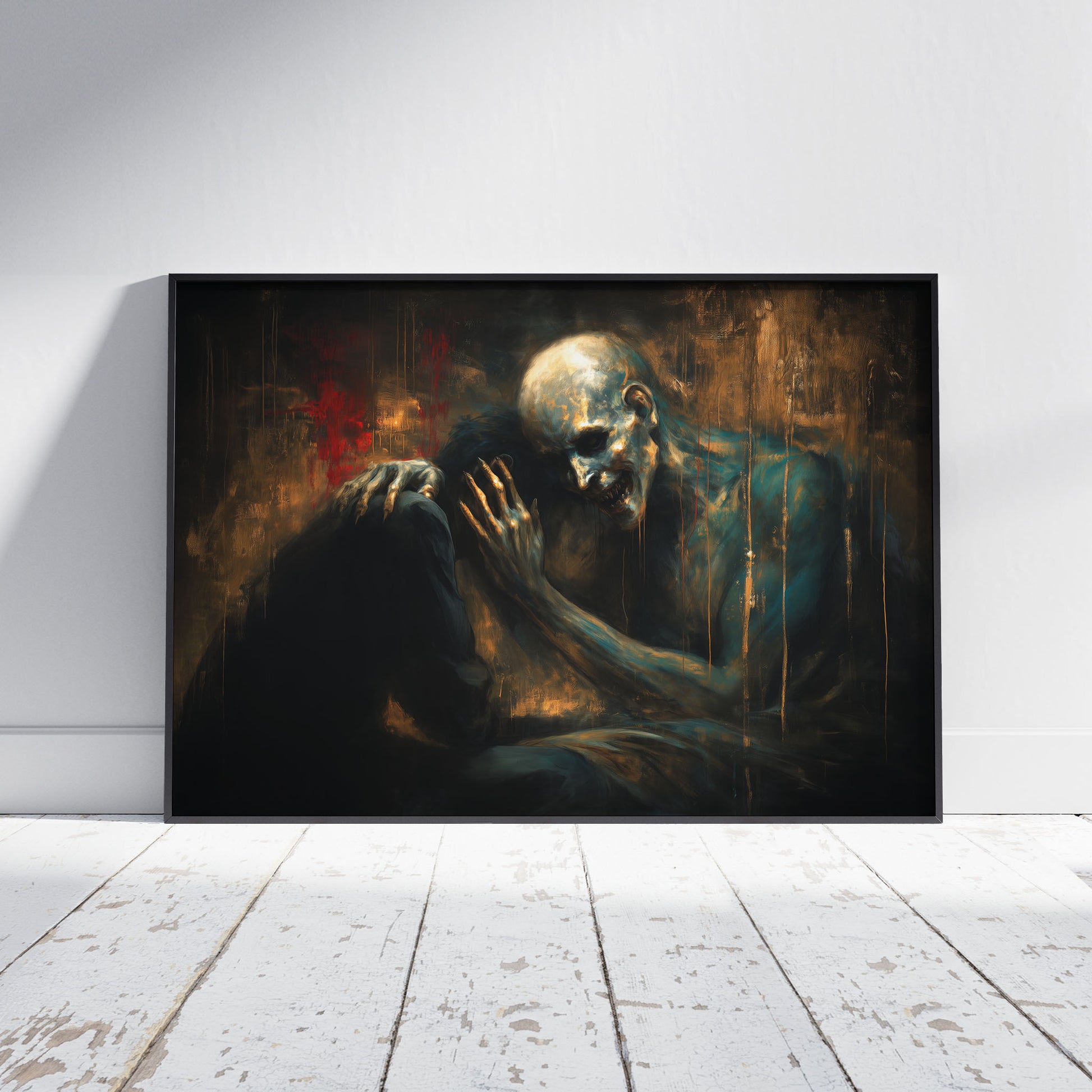
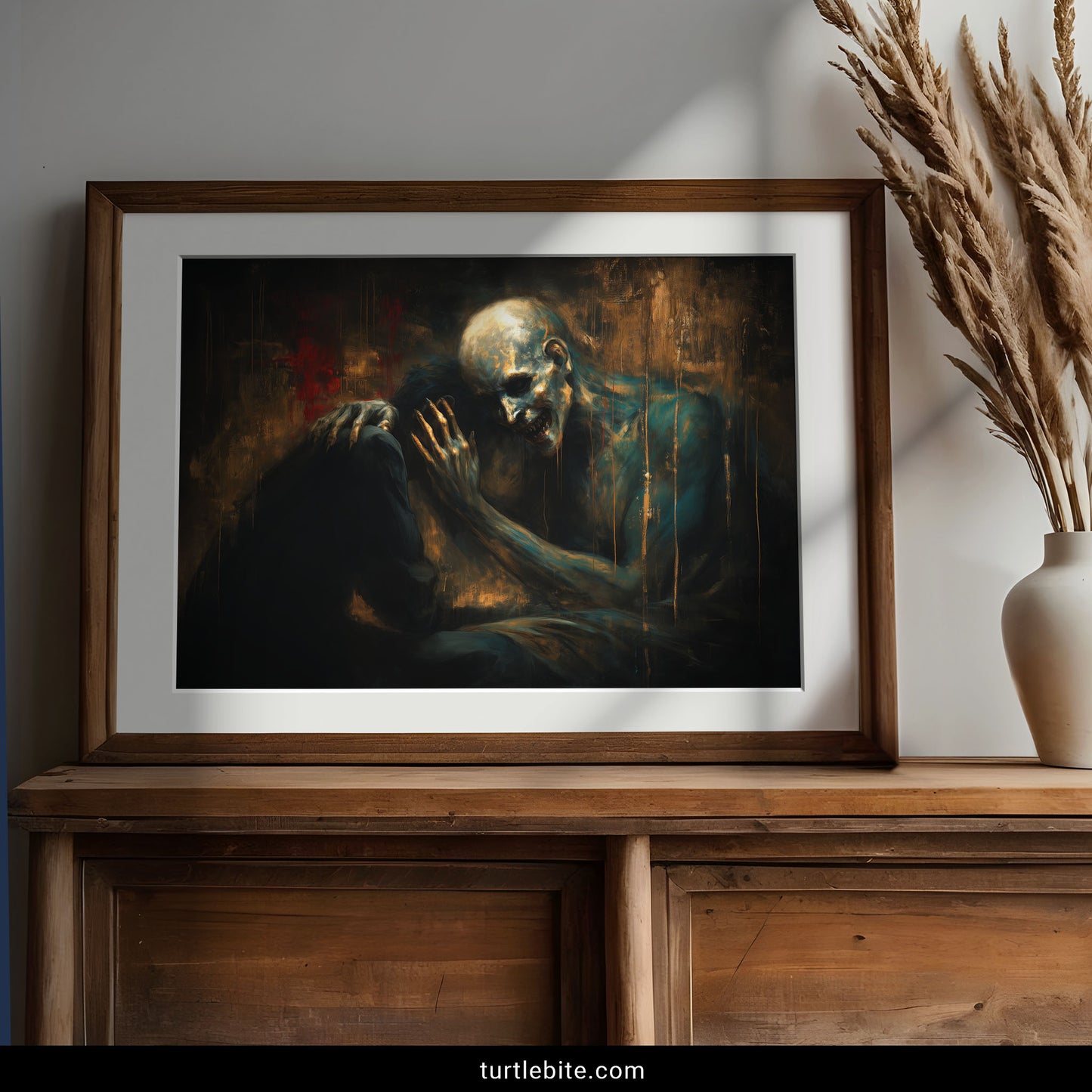
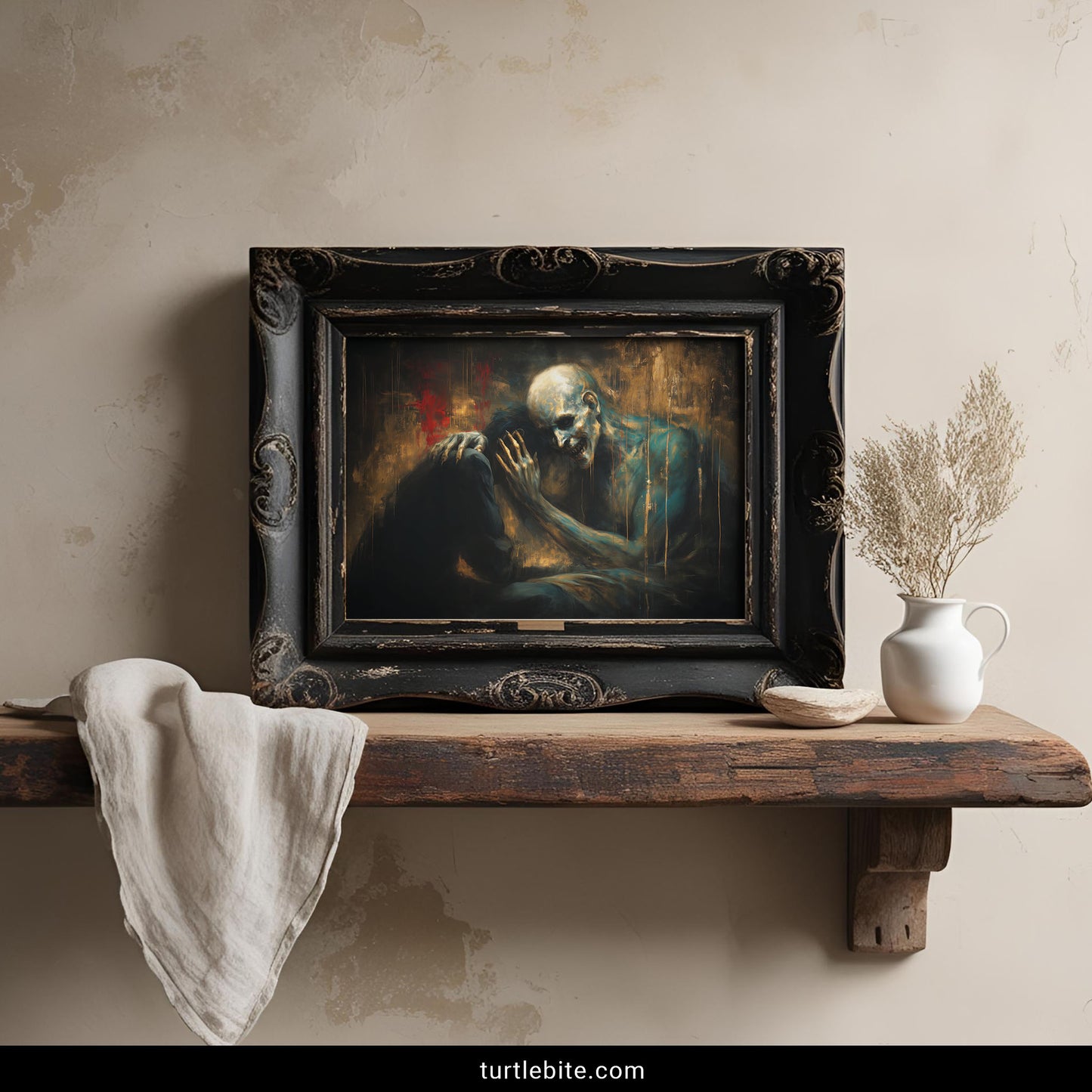
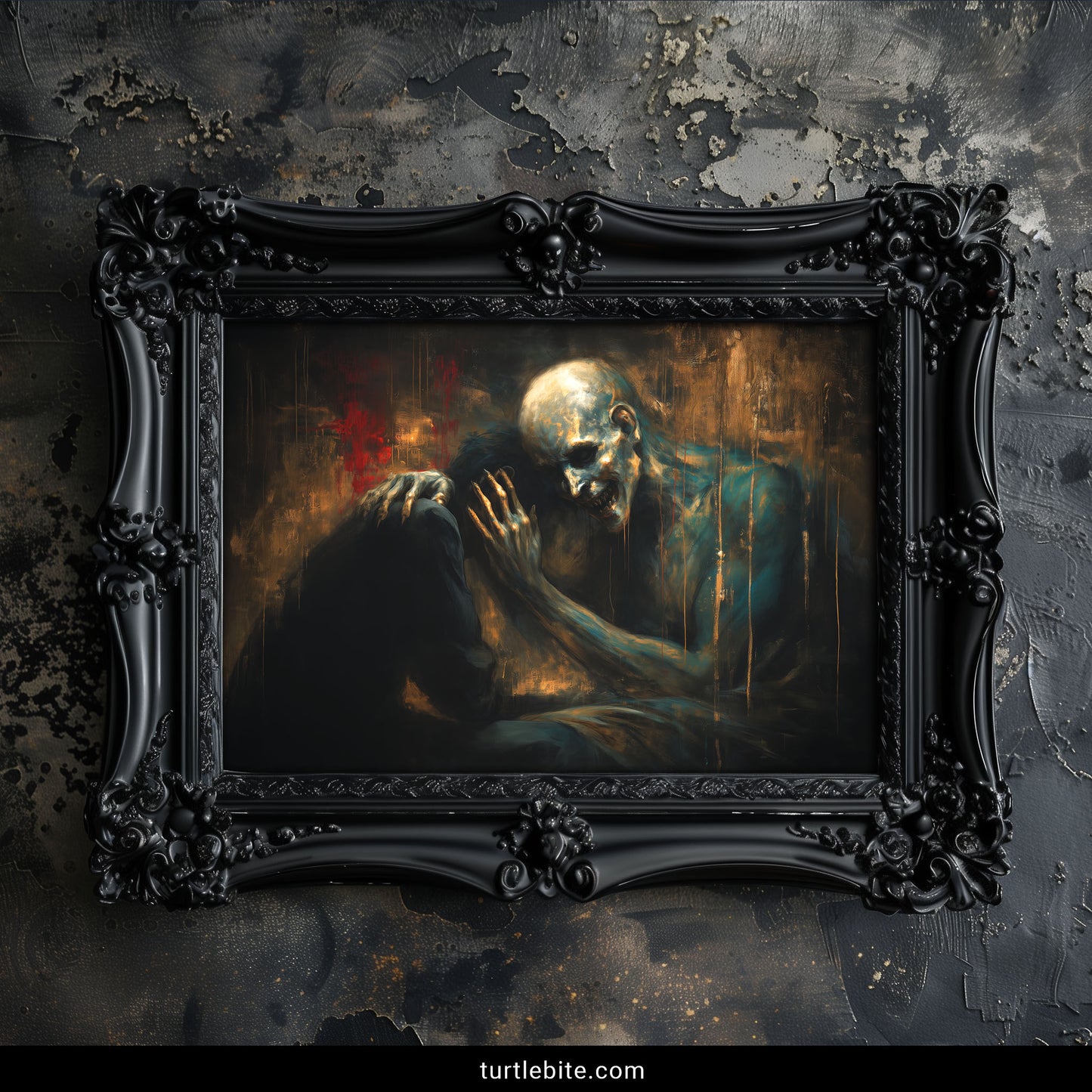
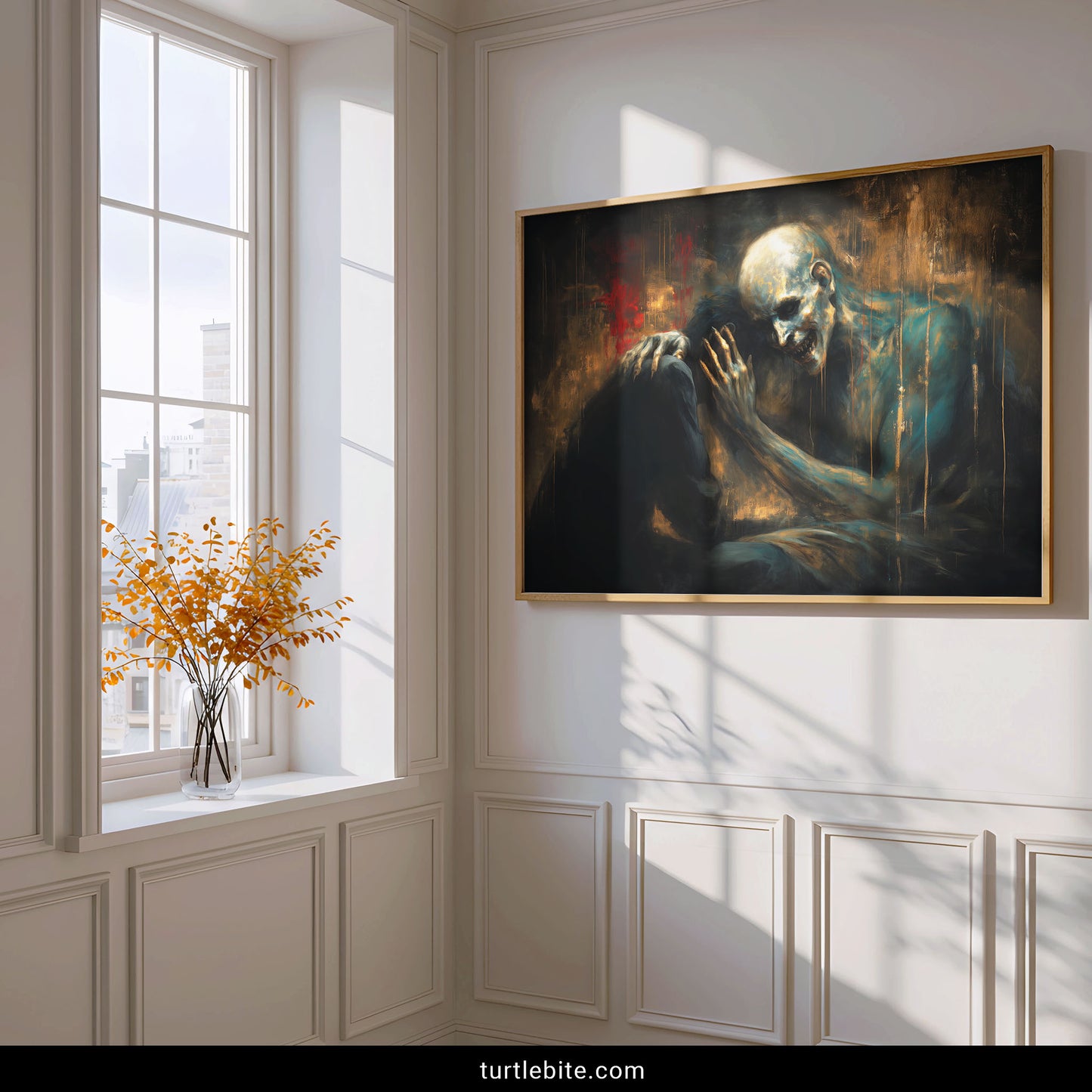
A hollow-eyed ghoul. A human face buried in its chest. One of them is comforted. The other is doing the comforting. You already know which is which – and if that lands for you the way it should, keep reading.
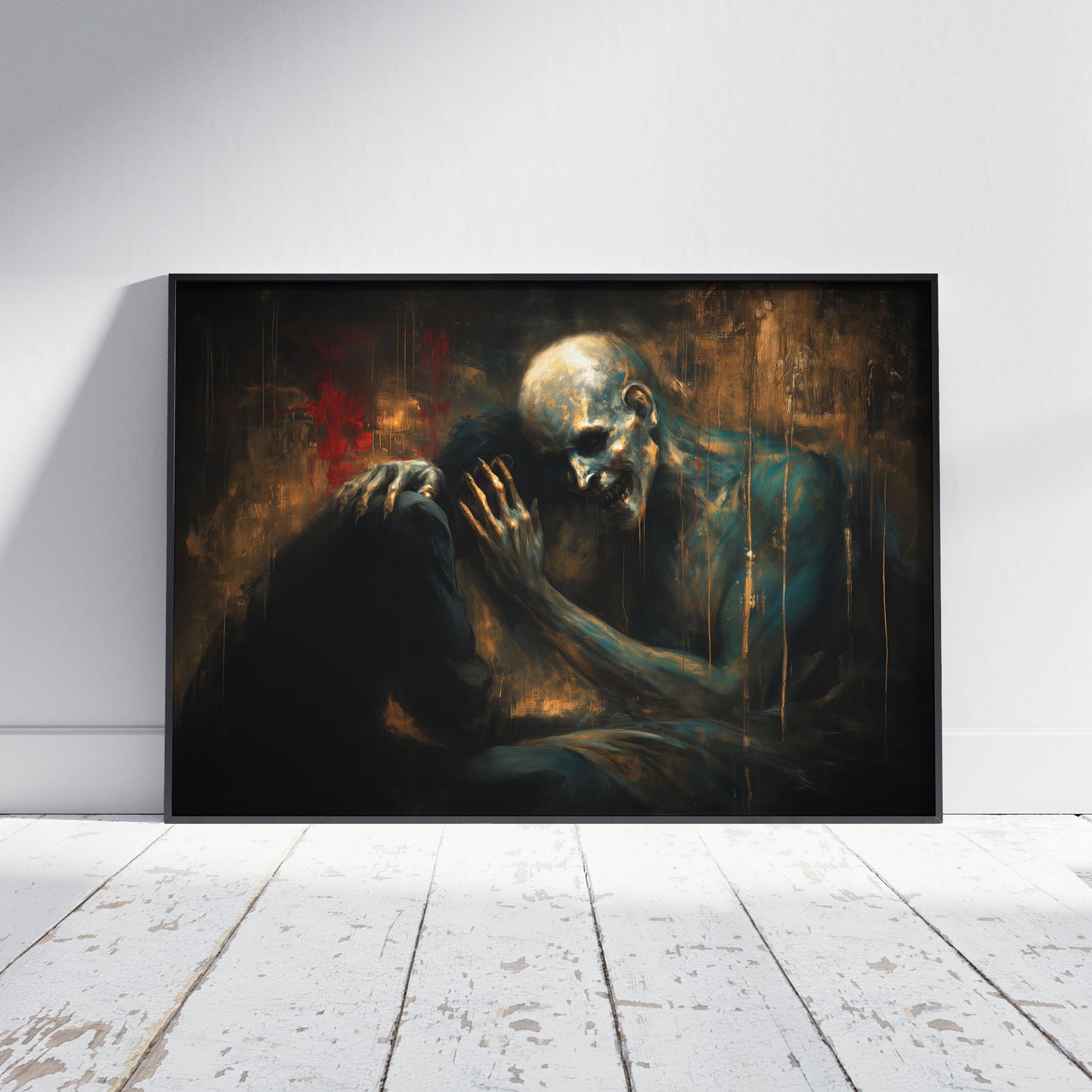
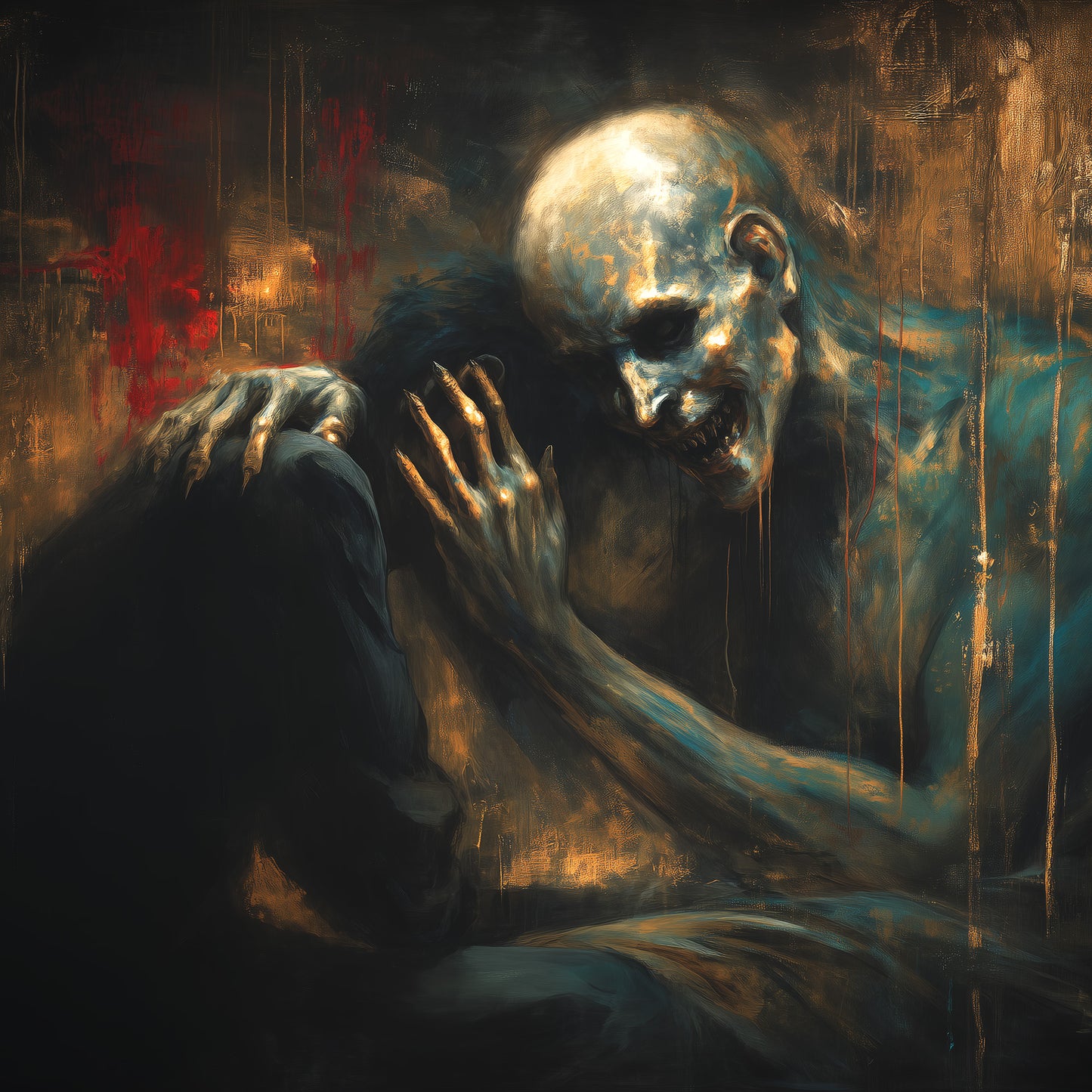
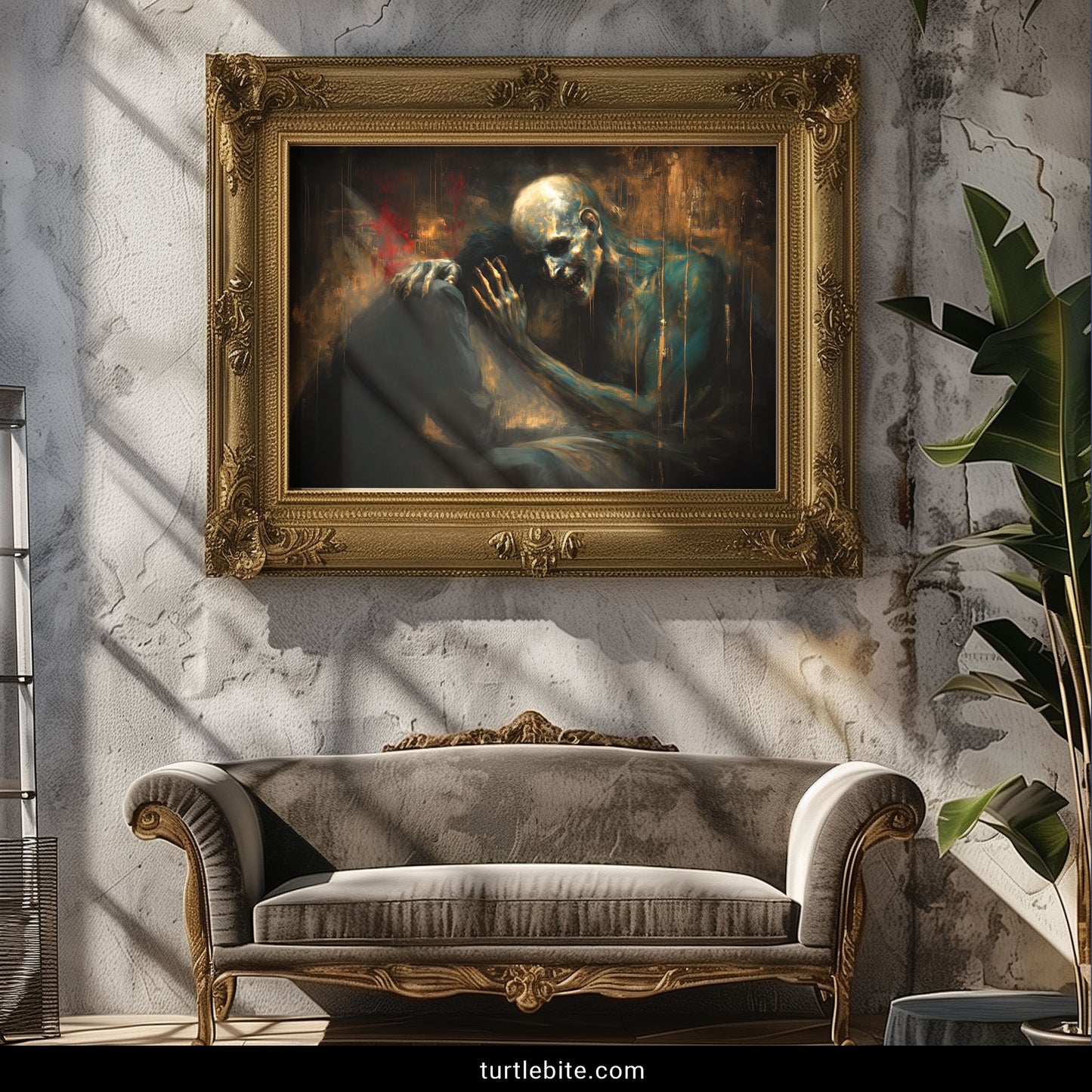
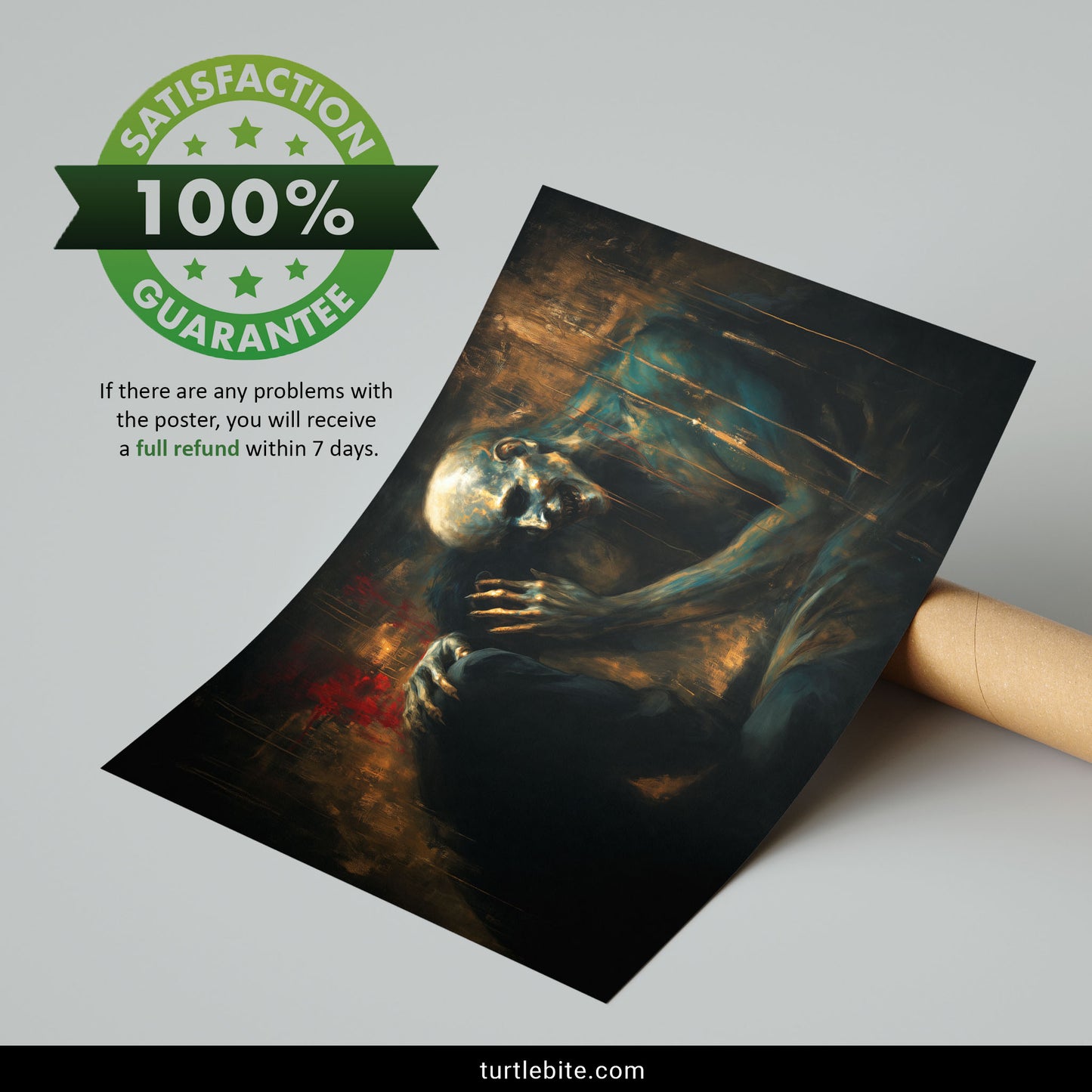
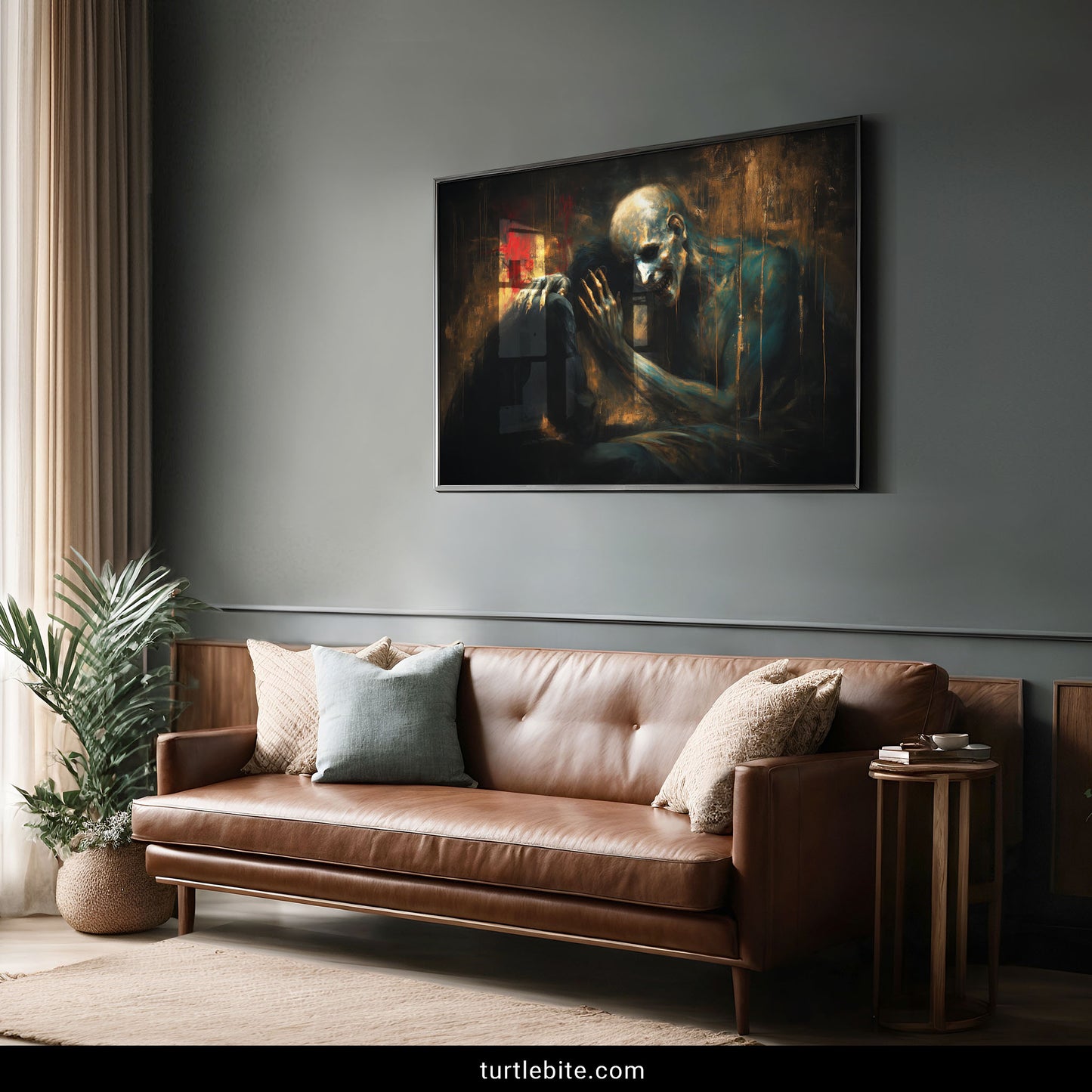
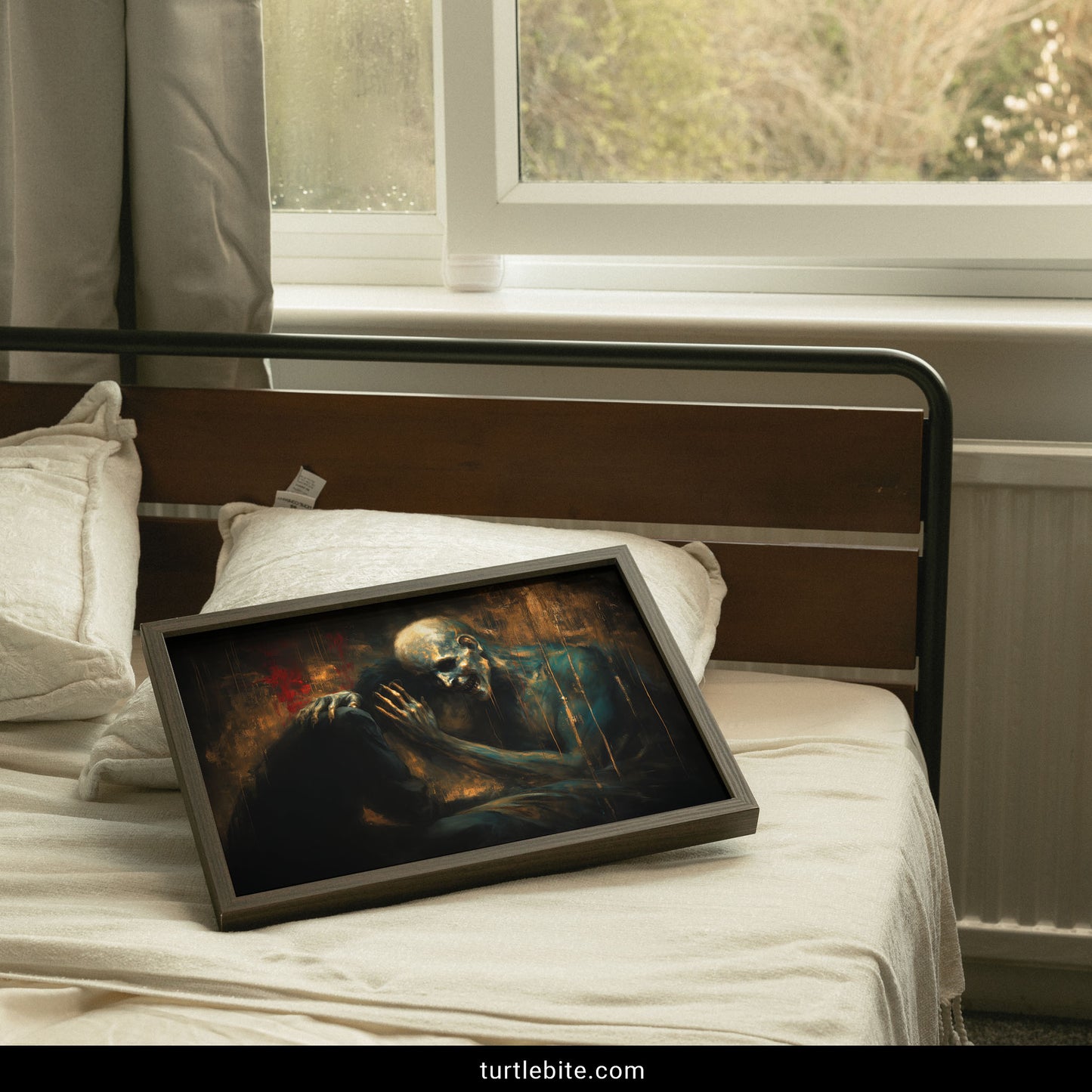
This painting doesn't ask permission. A gaunt, bald creature with teal-grey skin and long black claws holds a human figure who has pressed their face into the monster's chest – not struggling, not escaping. Just... staying there. Willingly. Like this is the safest place they know.
That's either deeply disturbing or deeply relatable. Possibly both. Definitely both.
This is what the best dark figurative oil painting does – it tells an emotional truth that cheerful art has been carefully avoiding for centuries. And it does it without blinking.
The Image: What's Actually Going On
The Figure Seeking Comfort
Let's start with the human. Head pressed against the ghoul's chest, face hidden, body collapsed into the embrace – this is someone who has given up performing composure. They're not standing tall. They're not managing their feelings. They've surrendered completely to the one presence that apparently makes them feel safe.
That presence happens to be a monster. And honestly? Relatable.
There's no struggle in this posture. No resistance. The human found their creature and held on. The painting doesn't judge this. It just shows it – with the kind of unflinching honesty that makes genuinely great gothic wall art so much more affecting than something pretty hanging above a sofa.
The Ghoul as Caregiver
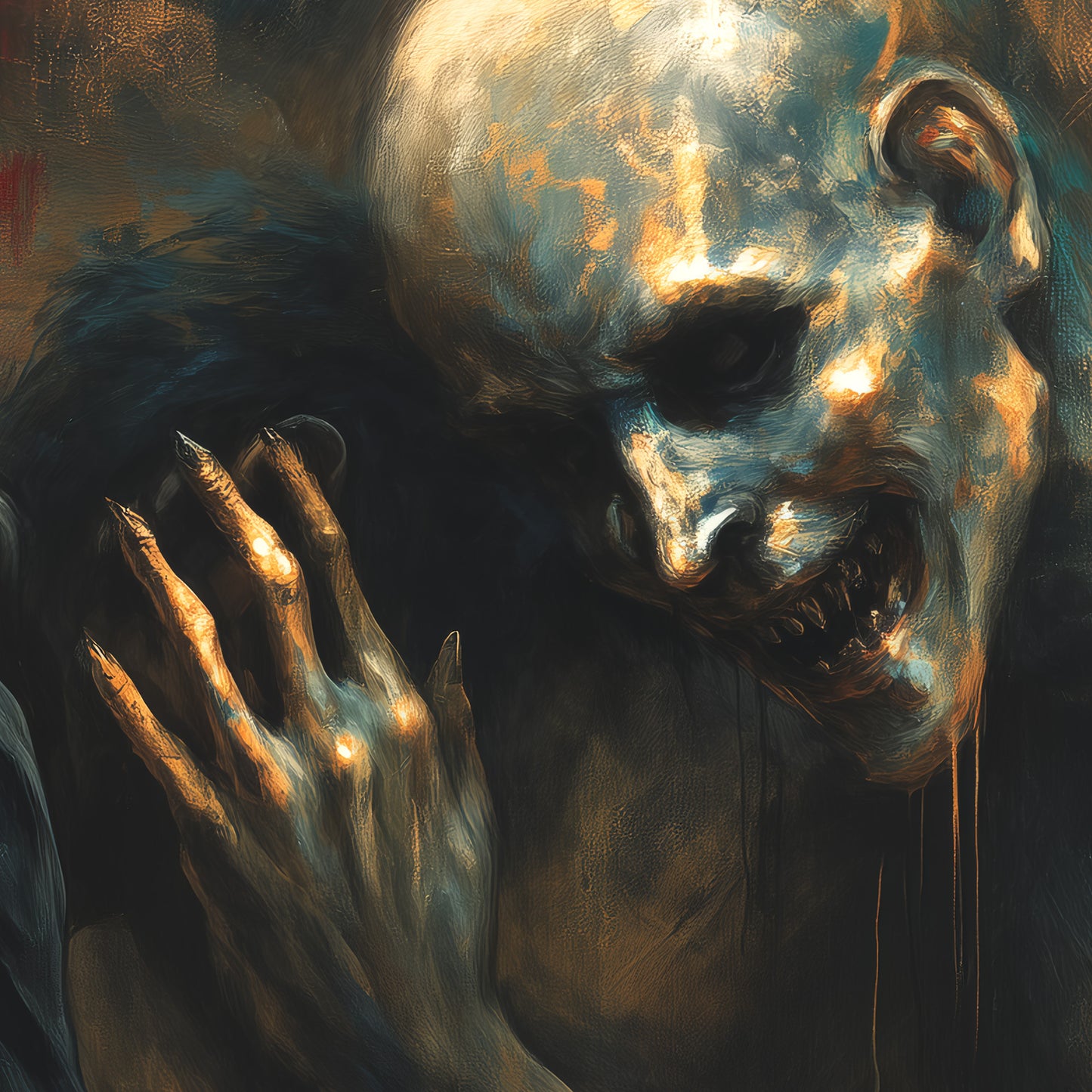
Now look at the creature. Bald, pallid skull with deep-set hollow eyes. Long talon-like fingers – the kind that should be terrifying – curled with something that reads as restraint rather than threat. The body hunches toward the human, not over them. It leans in.
The ghoul's posture is protective. Almost tender. It has accepted the role of comfort-giver without apparent hesitation. The mouth is open, the expression ambiguous – somewhere between anguish and devotion. This is not a predator. This is the only one who showed up.
That distinction changes everything about how the painting lands.
The Colour Story: Cold That Feels Warm
Teal Skin Against Amber Fire
The creature's flesh reads in cold teal and blue-grey – the colour palette of something that shouldn't be alive, or was alive once and isn't quite anymore. And yet the background around them burns in amber, ochre, and smeared warm rust. Drips of paint run vertically – decay, tears, time passing.
The visual temperature contrast is doing serious emotional work here. Cold figure, warm world – and still the cold figure is where the human chose to go. That's not an accident. The artist understood that colour communicates before the brain can intervene.
The slash of deep red in the upper left corner acts as a silent alarm – something happened, or is happening, or will. The rest of the painting doesn't explain it. You just feel it.
The Drips Are Doing Something
Those thin vertical streaks running down the canvas aren't decorative. They read as the painting itself breaking down – melting, weeping, dissolving. It gives the whole image a sense of impermanence. This moment of dark comfort won't last forever. Nothing does.
That melancholy sits underneath the image like a bass note. The embrace is real but temporary. Hold tight while you can.
Why This Image Is Philosophically Unusual
The Monster as the Safe Place
Most visual culture trains us to read monsters as threats. Horror films, fairy tales, childhood nightmares – the creature is always what you run from. This painting inverts that completely. The creature is what you run to.
And the thing is, this isn't actually that strange if you think about it. How many people find genuine comfort in dark music, horror films, gothic aesthetics – things that most of the population finds threatening or off-putting? The darkness is the comfort. The monster is the companion.
This painting externalises that psychology beautifully. It shows what it looks like when someone stops apologising for where they find peace.
If you've ever felt more at home in a room full of dark gothic art than in a brightly lit, cheerful space, this painting is painting a portrait of you. IMO, that's the highest thing art can do.
Vulnerability Without Apology
The human figure is completely vulnerable. Face hidden. Body offered over entirely. No defences. And crucially – the painting frames this as strength, not weakness.
Choosing to be vulnerable in front of the thing that terrifies everyone else takes a specific kind of courage. Or exhaustion. Possibly both. The painting doesn't distinguish. It just holds the moment without commentary, which is exactly right.
This is why dark art resonates so deeply with people who've spent time feeling like outsiders. It doesn't demand you perform okayness. It sits with you in the dark and wraps its cold, clawed arms around you. Our Broken Creature in Misty Forest Poster carries a similar energy – the monstrous as melancholic, the frightening as familiar.
The Craft: Oil Painting Technique and Why It Matters
Expressionist Brushwork
The technique here sits firmly in the expressionist tradition – aggressive, textured brushwork that prioritises emotional truth over photographic accuracy. The impasto strokes are thick enough to cast actual shadows on the canvas. You can feel the artist's hand in every passage.
This is important because it means the image doesn't let you stay comfortable at a distance. The roughness pulls you in. The unresolved edges make your eye work. You can't skim this painting – it demands engagement.
Chiaroscuro and What It Emphasises
The lighting is classic chiaroscuro – deep blacks in the lower half, strong directional light illuminating the ghoul's skull from above. That crown of white-gold at the top of the creature's head is deliberate. It reads as a fractured halo. Fallen divinity. Something that was more than this, once. Something that suffered its own transformation.
It elevates the ghoul from simple monster to tragic figure. And suddenly the human choosing this creature as comfort-giver makes a different kind of sense. They're not clinging to horror. They're clinging to something that understands what it's like to be seen as monstrous. :/
Hanging This Kind of Painting: A Few Honest Thoughts
It Will Change Your Room
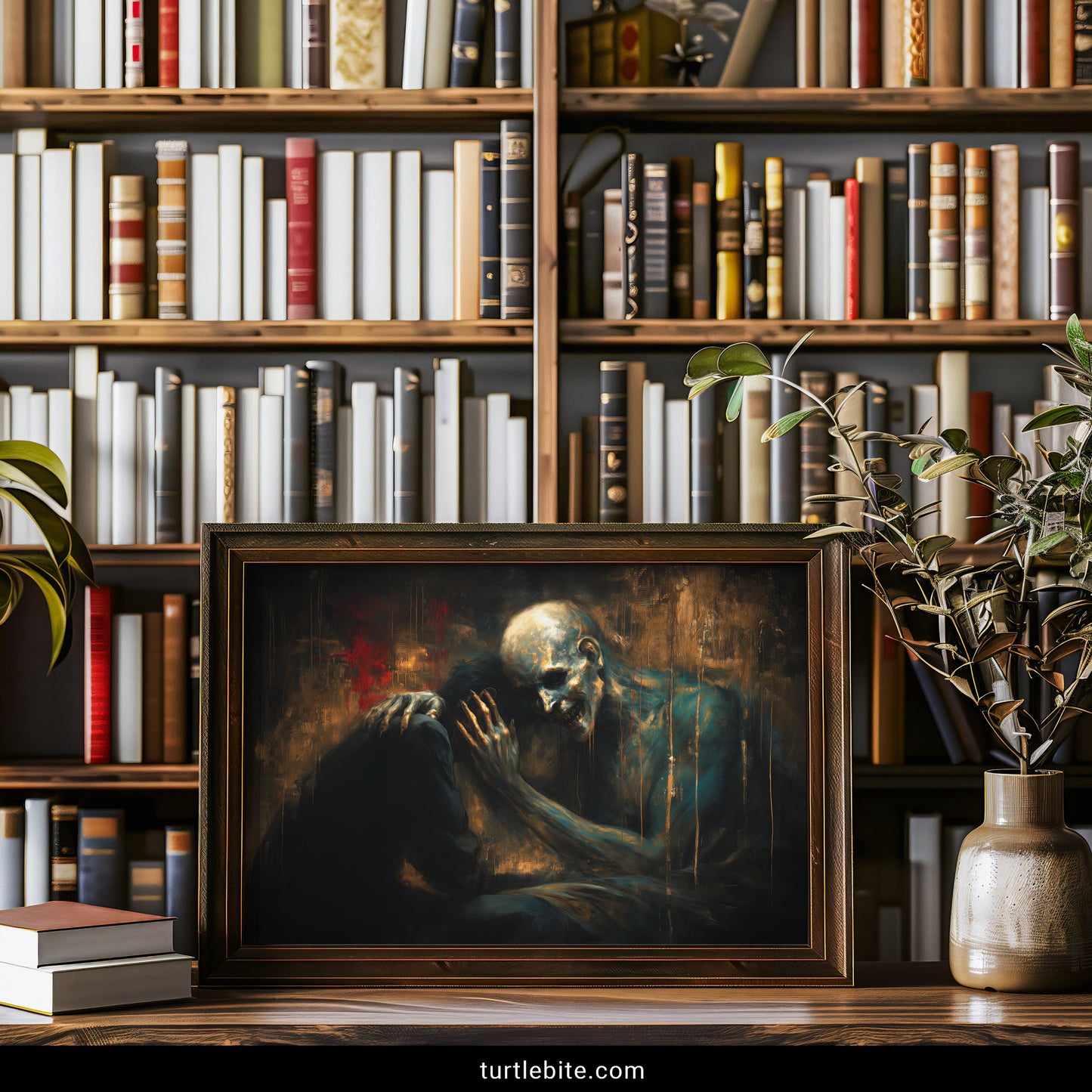
A piece with this much emotional gravity doesn't decorate – it anchors. Anyone who's hung genuinely powerful dark art knows the feeling: the room reorganises itself around the painting. Visitors stop. They look. They say something they didn't mean to say out loud.
That's the feature, not the bug.
Give it a wall that can hold its weight. Deep charcoal, matte black, or dark forest green work beautifully – the warm amber tones in the background will sing against a dark wall. Avoid white or pale grey; you'll lose the atmospheric depth that makes the painting work.
Don't Over-Crowd It
This isn't a gallery piece you surround with a dozen others. It needs space to breathe and be uncomfortable in. A single complementary piece – something quieter, more minimal – can work alongside it, but the instinct to fill the wall around it should be resisted. The Dark Face Painting with Gothic Glowing Eyes carries a similar dramatic weight and could hold its own on an adjacent wall without competing.
Who Hangs Something Like This (And Why)
People Who've Stopped Pretending
The dark art community has a specific relationship with imagery like this. These are people – intelligent, self-aware, aesthetically serious – who stopped decorating their homes for other people's comfort a while ago. They hang what resonates. What tells the truth. What makes the space theirs.
A painting about finding comfort in a monster isn't strange to them. It's a self-portrait.
This is exactly the audience TurtleBite's catalog speaks to – the sophisticated rebels who want dark surrealism wall art that actually says something, not just "spooky vibes for Halloween."
People Who Understand the Joke
There's also a subtle dark humor in this image that deserves acknowledgment. The scenario is genuinely absurd – human buries face in monster's chest, monster accepts this with apparent resignation. It's the gothic equivalent of a comfort film. The void, but make it cozy.
Dark art enthusiasts appreciate this layer. The willingness to be earnest about a ridiculous premise is its own kind of sophistication. FYI: laughing at the painting a little doesn't undercut how much it moves you. Both things are true.
The Takeaway (From the Painting, Not Me)
This is what dark figurative oil painting does at its best: it takes an image that should disturb and rearranges it into something that heals. The ghoul isn't the threat here. The ghoul is the only one who stayed.
If your walls still hold only cheerful, inoffensive art – stuff your guests can glance at without feeling anything – maybe ask yourself what you're actually decorating for. Art this honest doesn't let you off the hook that easily. It sits on your wall and watches you avoid it, and then one day at 2am you end up standing in front of it understanding something you didn't before.
That's the whole point. And honestly, it's worth every square inch of wall space you give it. :)
Find dark figurative and gothic horror art that actually means something at turtlebite.com. Fast worldwide shipping, Swiss quality, and zero interest in decorating your home with things that don't haunt you a little.