
When Death Stops to Smell the Flowers: The Grim Reaper's Softer Side
ChristianShare
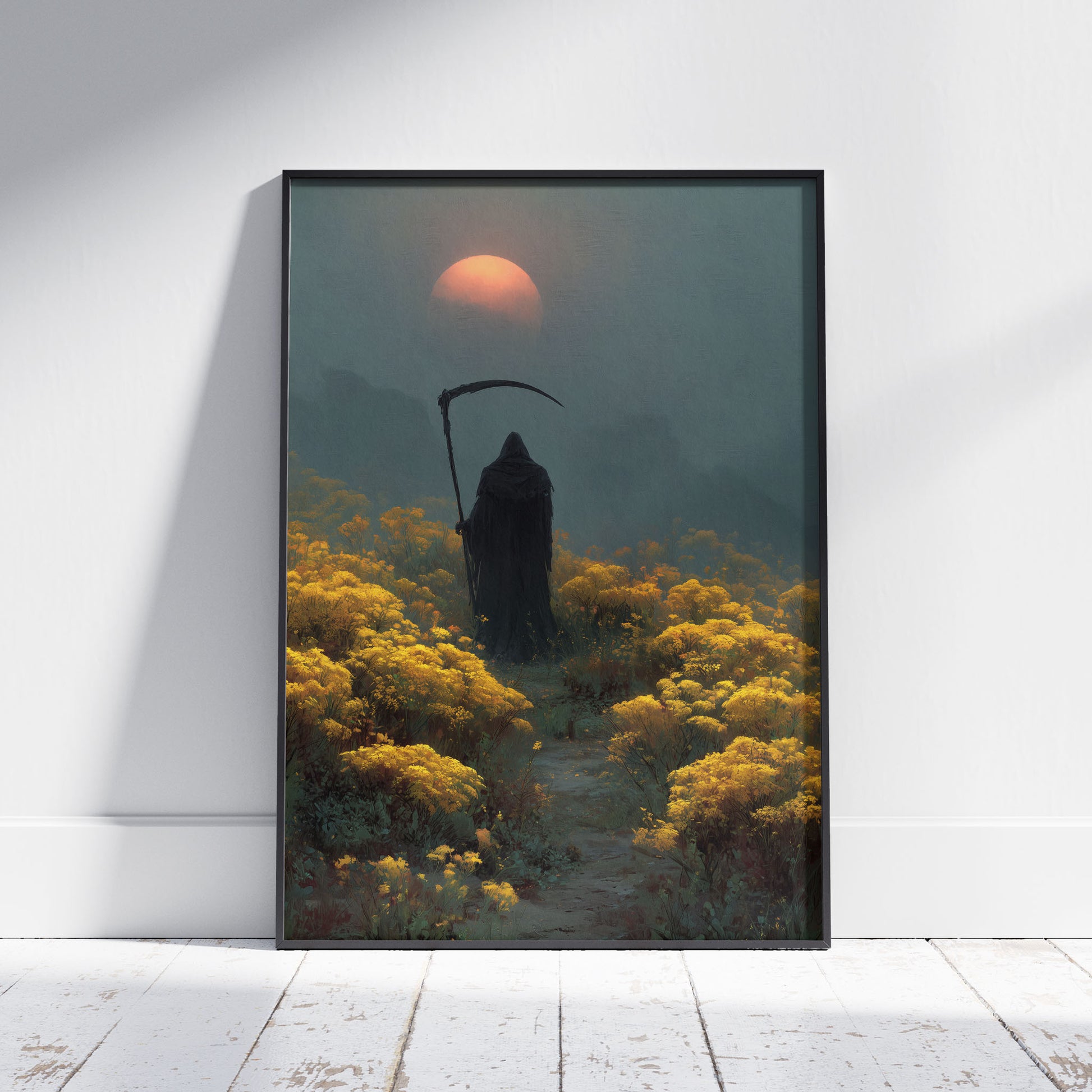
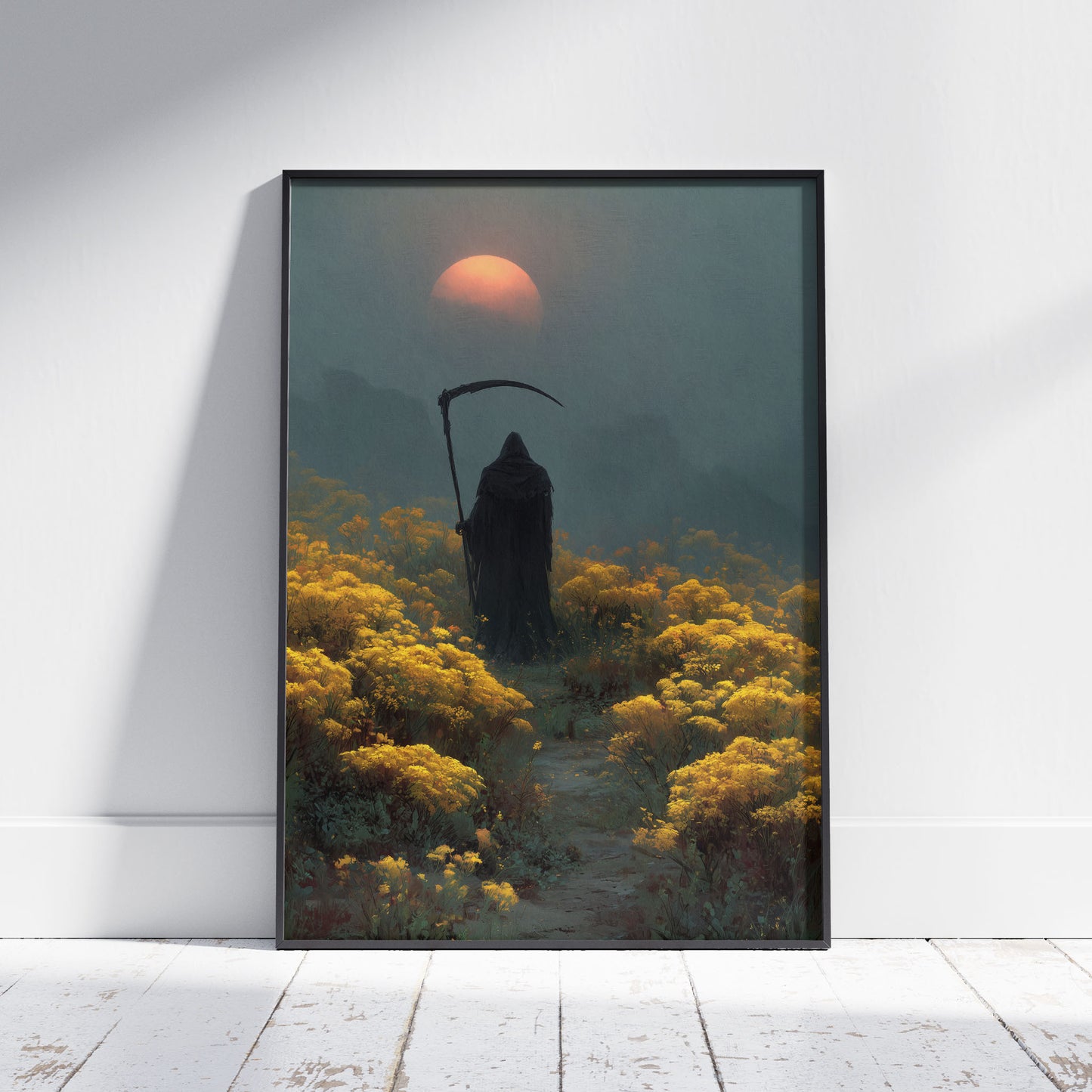
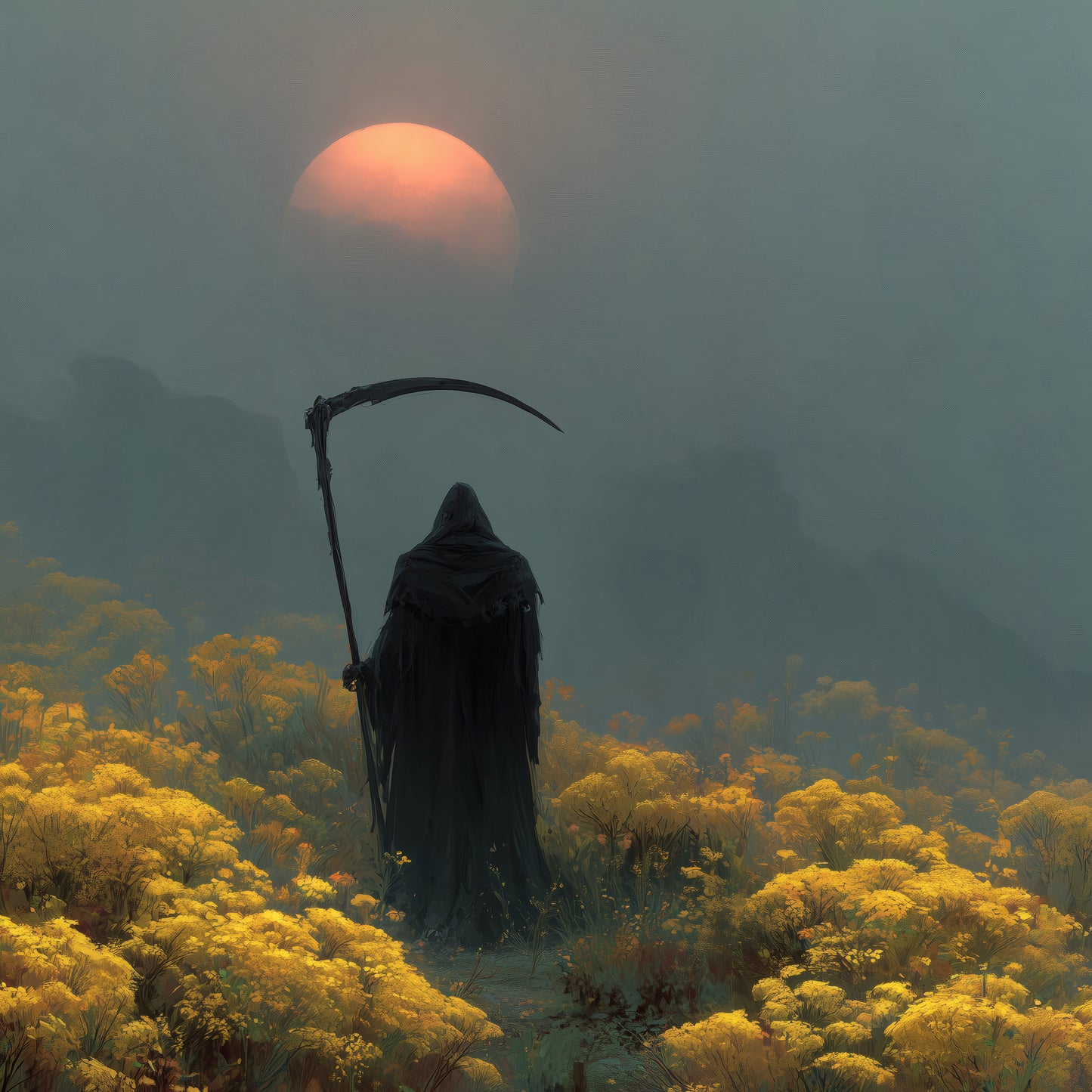
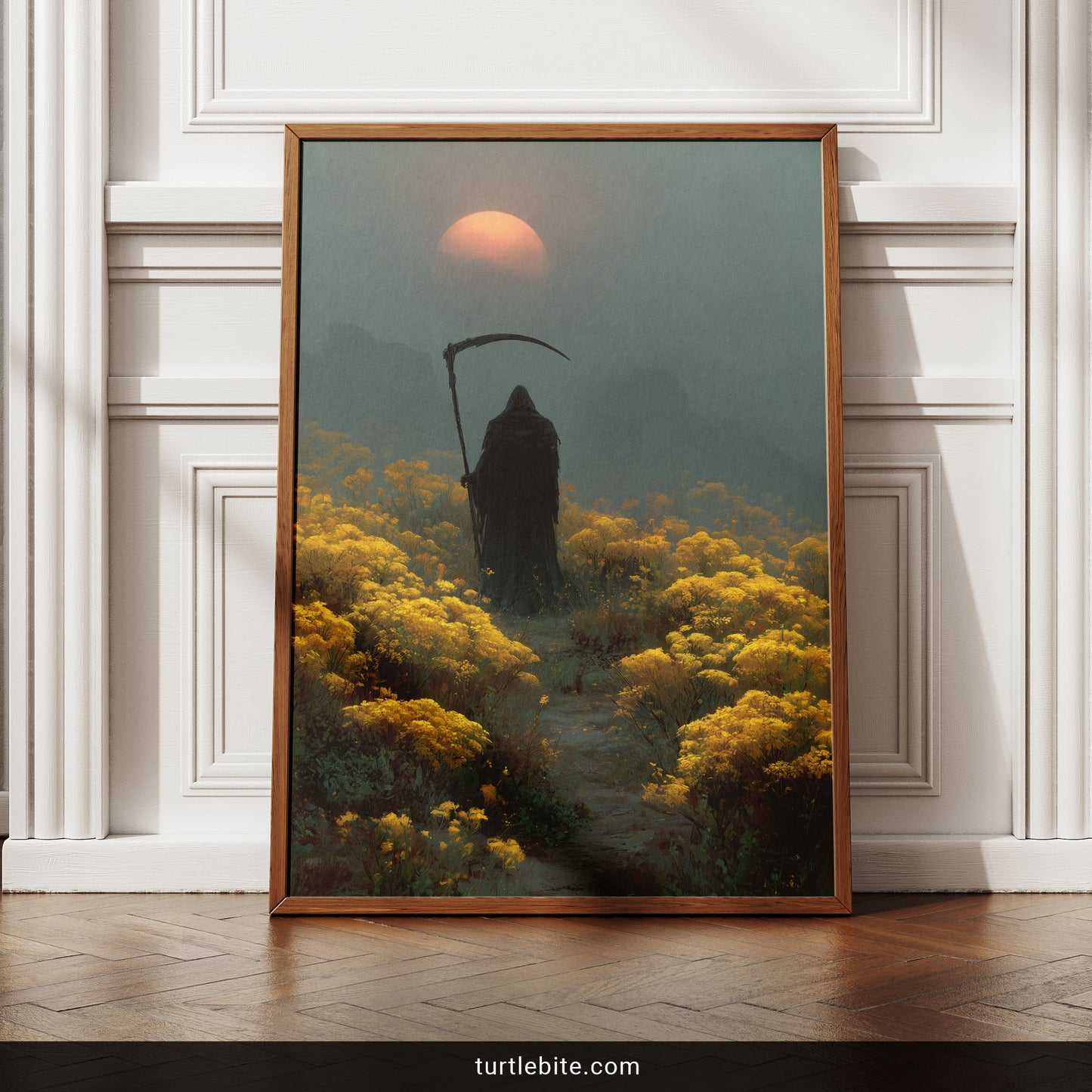
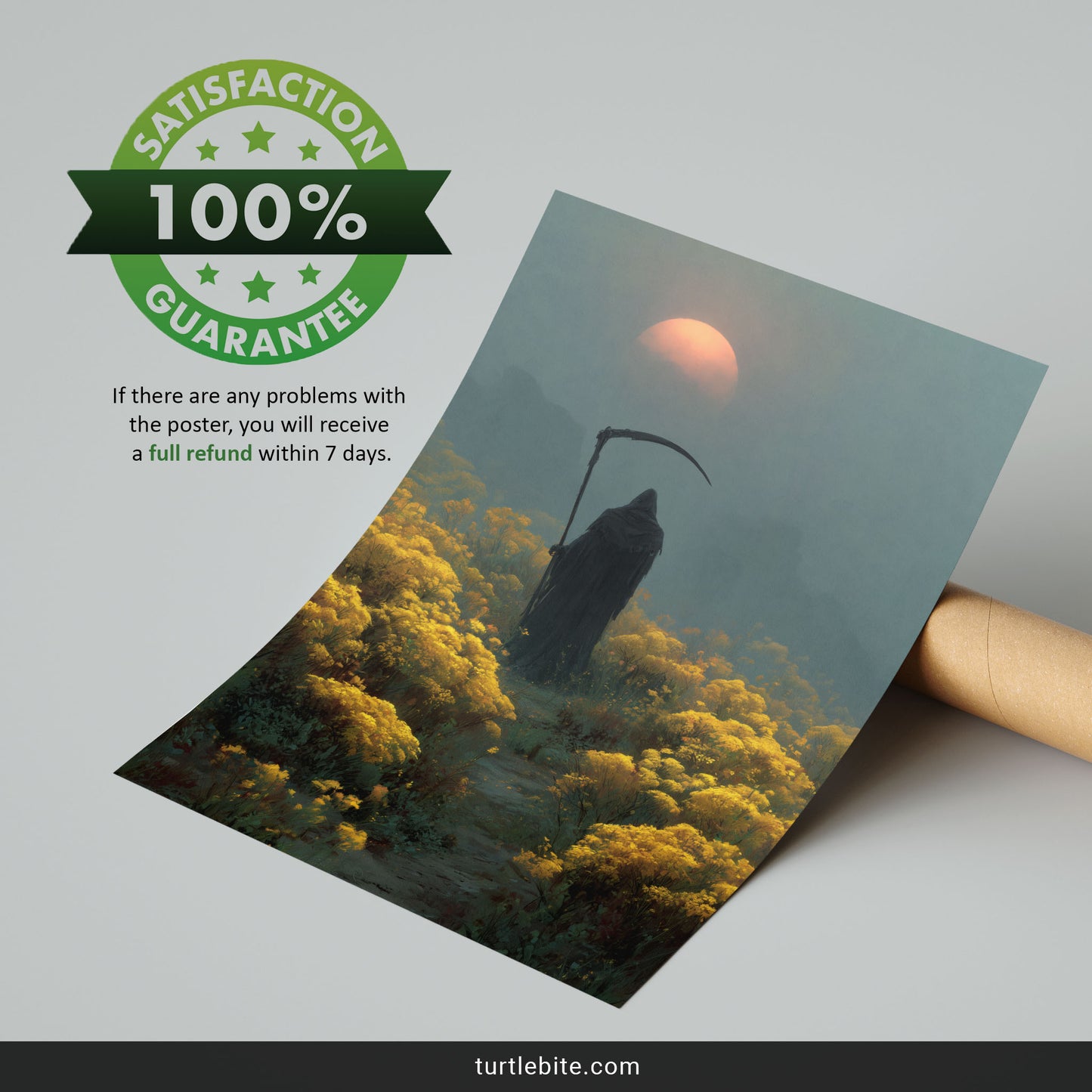
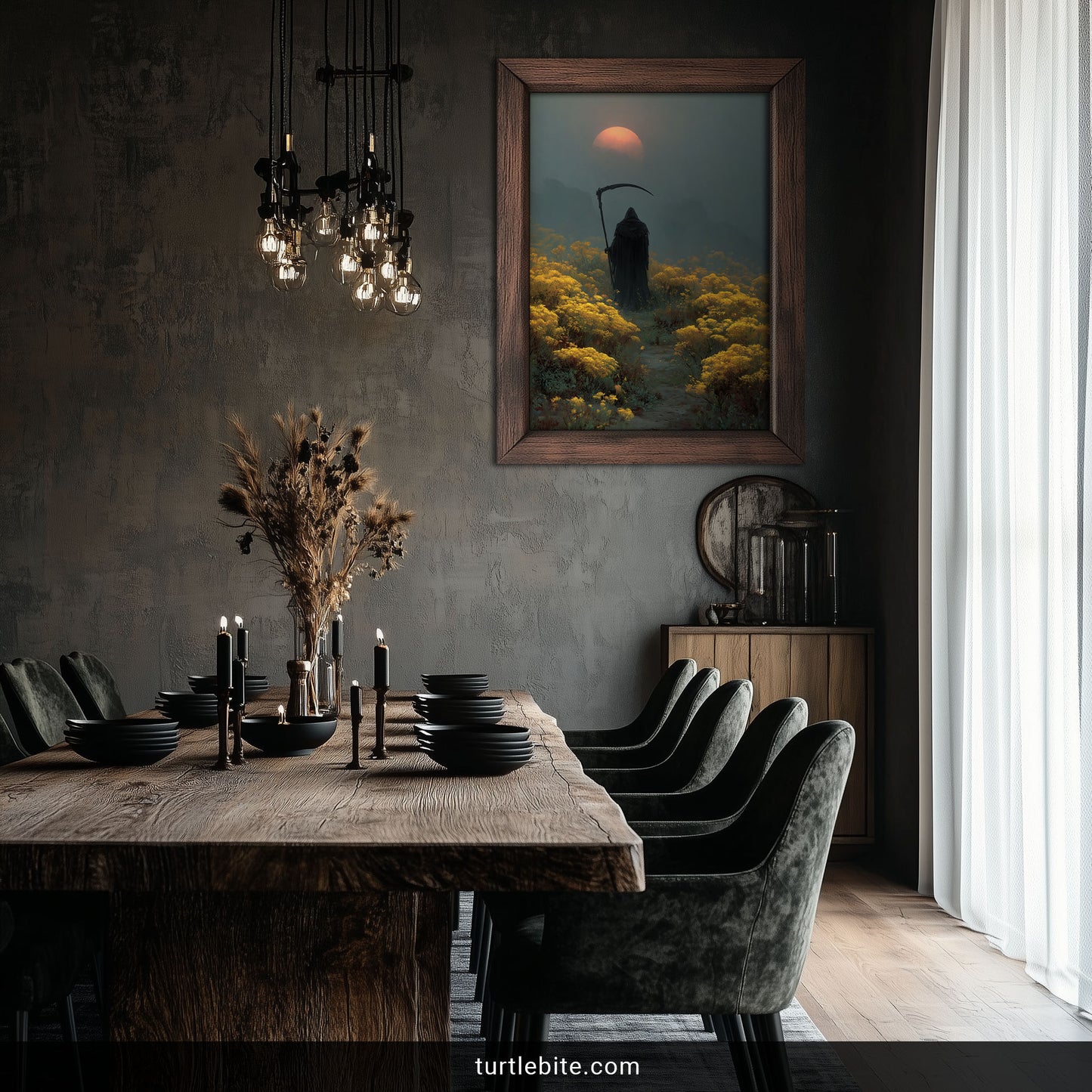
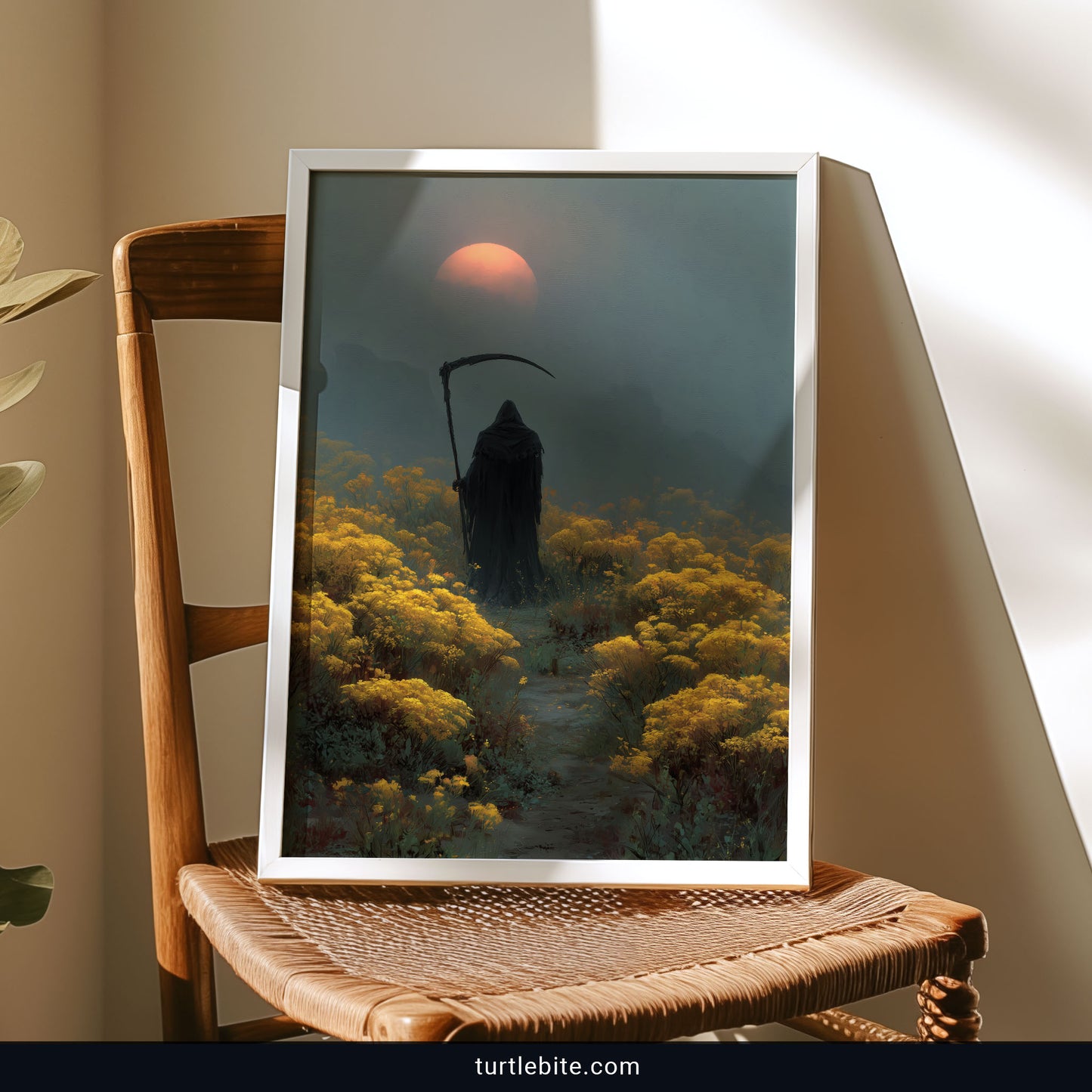
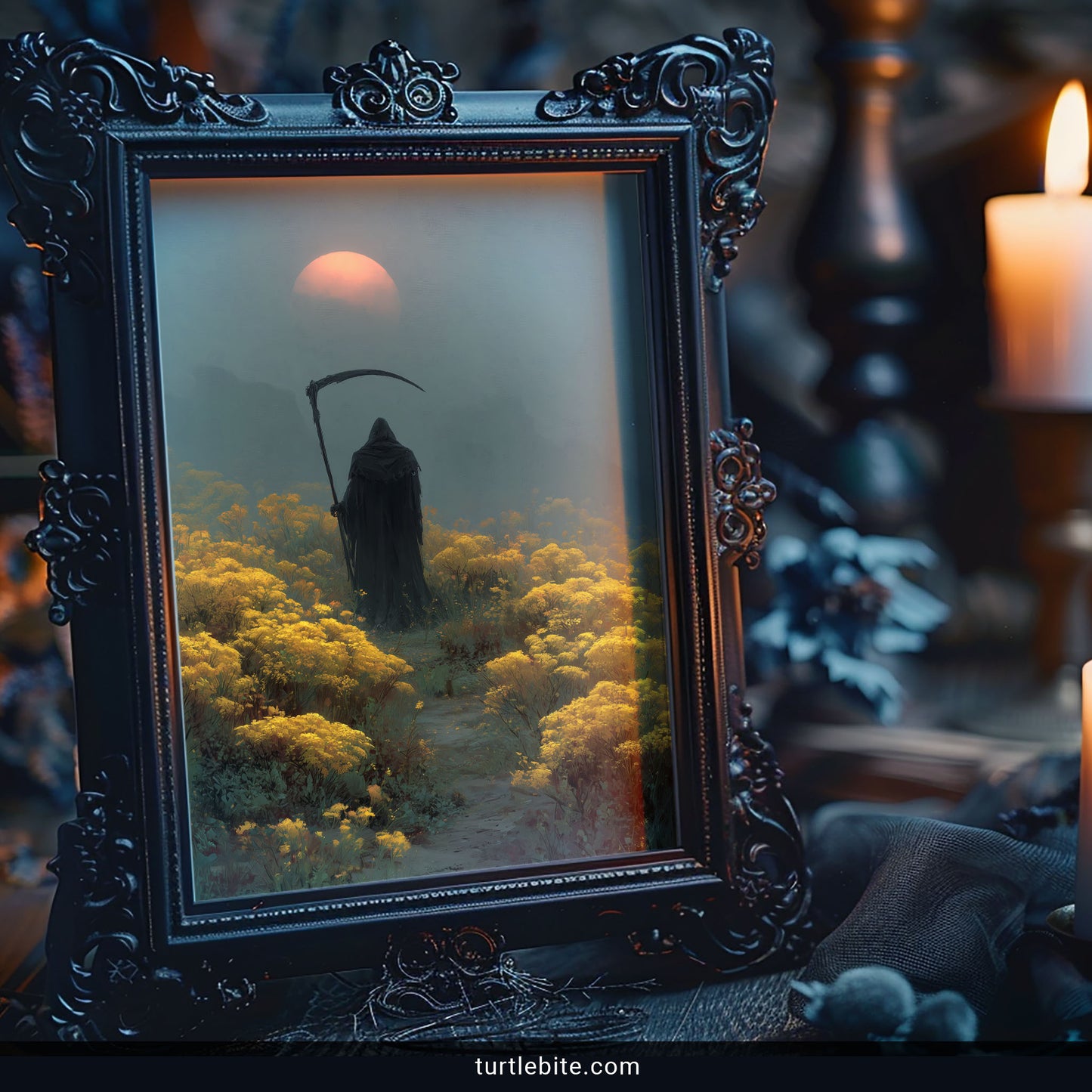
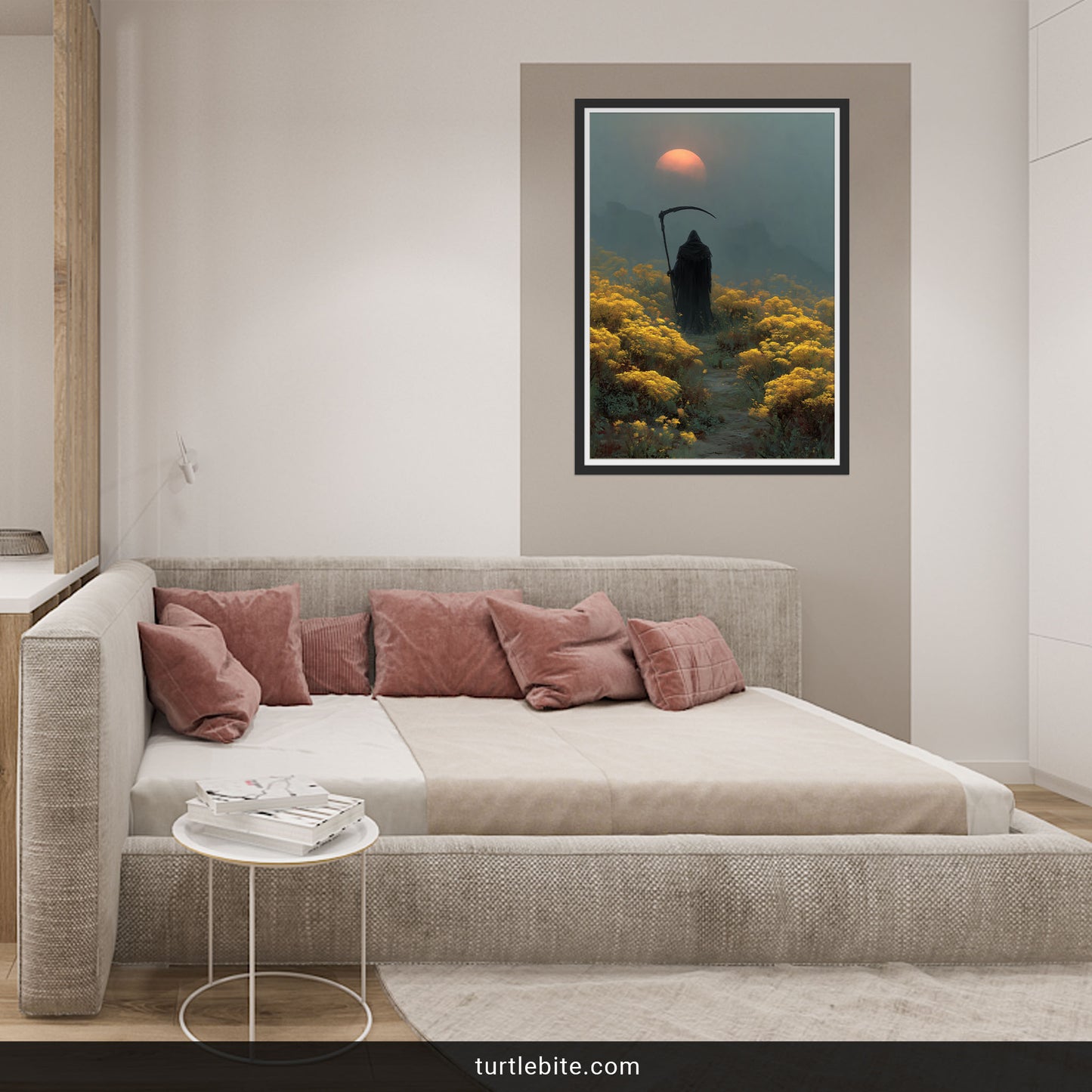
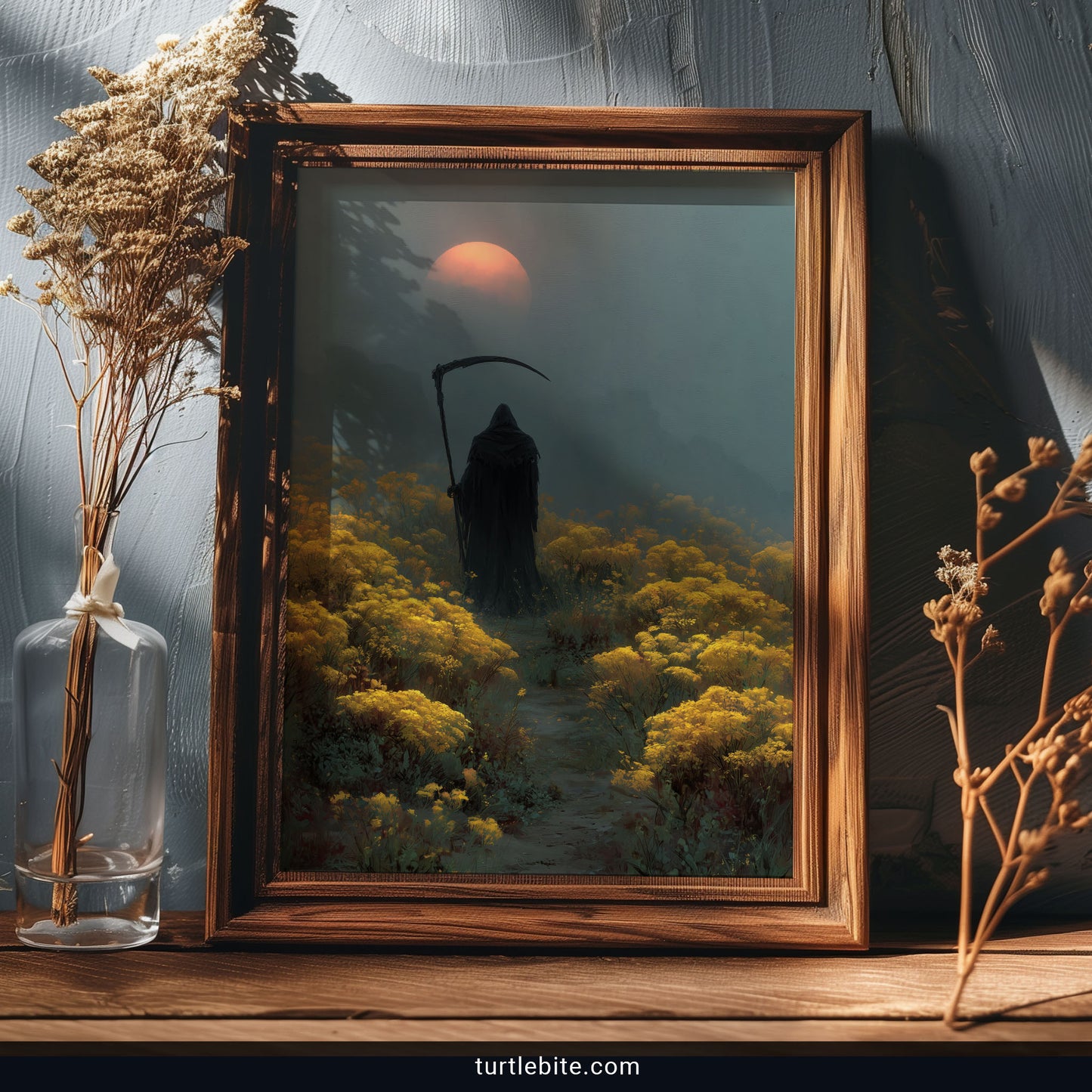
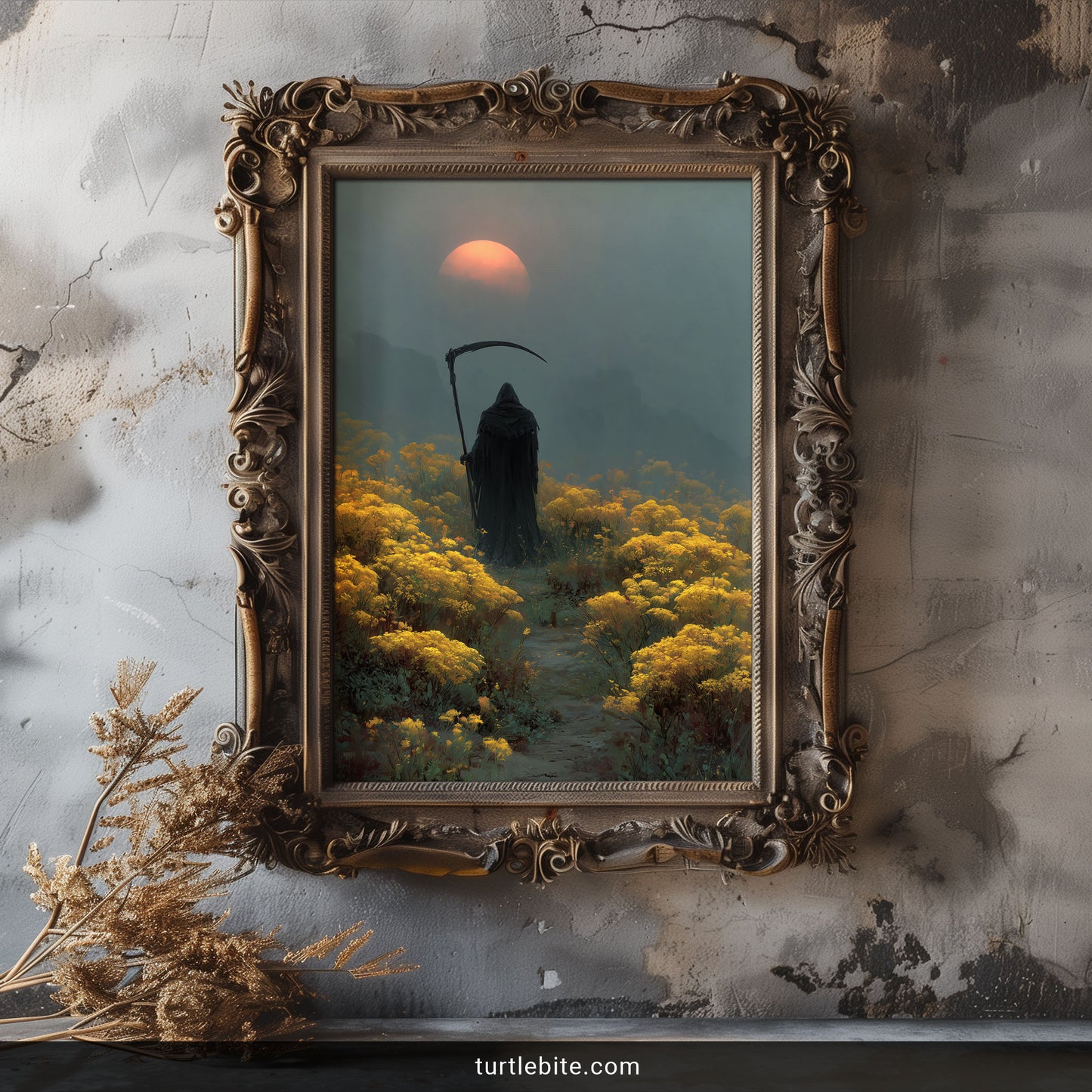
So there's Death, standing in a field of golden flowers under a hazy sunset. Not exactly the setting you'd expect for the ultimate party crasher, right?
This particular piece of gothic art does something brilliant – it takes the most feared symbol in human history and plops it down in one of nature's most cheerful settings. The result? An image that's equal parts haunting and weirdly peaceful. It's the kind of artwork that makes you stop scrolling and actually think about mortality for a hot second before going back to your coffee.
Let me walk you through why this Grim Reaper in flowers concept has become such a powerful trend in dark art, and why your walls are basically crying out for this kind of beautiful contradiction.
The Symbolism That Hits Different
Death Among Life
Here's the thing about this composition – it's not trying to scare you. The Grim Reaper stands calm and still in a sea of vibrant yellow blooms, creating this jarring contrast between life's fleeting beauty and death's patient inevitability. Those flowers? They're bursting with life, color, warmth. The robed figure? Cold, dark, eternal.
It's basically visual poetry about the cycle of existence, except instead of reading some dusty Victorian verse, you get to hang it on your wall and let it mess with your guests' heads. IMO, that's way more fun.
The yellow flowers themselves carry meaning – they could represent the last moments of vitality before the fade, or perhaps they're a reminder that death doesn't discriminate. Even in the brightest meadow, the Reaper walks. Cheerful thought for your morning coffee, right? :)
The Atmospheric Mood
That sunset washing everything in muted tones creates an almost dreamlike quality. The misty, soft-focus background suggests we're witnessing something between worlds – not quite the land of the living, not quite the beyond. It's liminal space at its finest, and if you're into whimsical surrealism, this kind of ethereal boundary-crossing imagery probably already speaks to your soul.
The composition forces your eye to follow a path through the flowers straight to that hooded figure. It's deliberate, almost meditative. You can't look away even if you wanted to.
Why Gothic Art Needs More Flowers
Breaking the Darkness Stereotype
Look, I love a good creepy basement horror scene as much as the next gothic art enthusiast, but sometimes the most unsettling images are the ones that pair death with beauty. There's something deeply philosophical about a Grim Reaper surrounded by nature's temporary glory.
Traditional gothic art often leans hard into dungeons, skulls, and perpetual midnight. Which, don't get me wrong, totally has its place. But this softer approach to mortality? It challenges our assumptions about what dark art should look like. Death doesn't always need to be in a crypt – sometimes it's just taking a contemplative walk through a field at golden hour.
The Victorian Influence
This aesthetic owes a debt to Victorian gothic romanticism, where death was treated with both reverence and artistic beauty. Those Victorians were obsessed with mortality – they wore mourning jewelry, took photos with deceased relatives, and wrote poetry about decay. But they also understood that death could be portrayed with elegance rather than pure horror.
This Grim Reaper in flowers concept channels that same energy. It's memento mori meets pastoral painting, and honestly? It works better than it has any right to.
The Technical Brilliance You Might Miss
Color Theory That Slaps
The warm yellows and golds of the flowers against the cool, shadowy figure create a color contrast that's both visually striking and symbolically loaded. Warm colors typically evoke life, energy, happiness. Cool tones suggest distance, mystery, the unknown. Putting them together creates this push-pull tension that makes the image impossible to ignore.
The hazy, atmospheric lighting diffuses everything just enough to feel otherworldly without losing detail in the flowers or the Reaper's silhouette. It's that perfect balance between clarity and mystery.
Composition and Leading Lines
Notice how those flowers create a natural pathway? Your eye follows it right up to Death itself. It's not accidental – good gothic art guides your gaze deliberately. The path represents life's journey, obviously ending where all paths do. Subtle? Maybe. Effective? Absolutely.
The figure is positioned slightly off-center using the rule of thirds, which keeps the composition dynamic rather than static. The scythe cuts diagonally across the frame, adding movement to what could otherwise be a static scene.
What This Says About Your Taste (The Good Stuff)
You Get Nuance
If you're drawn to this kind of imagery, you're probably not interested in cheap shock value. You want art that makes people think rather than just react. The Grim Reaper in flowers isn't trying to jump-scare anyone – it's asking deeper questions about beauty, mortality, and the relationship between life and death.
That makes you part of the beautifully weird crowd who appreciate layered symbolism over surface-level spookiness.
You're Cool With Contradiction
The best gothic art embraces paradox, and this piece delivers that in spades. Death in a field of life. Darkness under a sunset. Fear wrapped in beauty. If you can hold these contradictions in your mind and find them compelling rather than confusing, congratulations – you're exactly the kind of person who gets what sophisticated dark art is all about.
Where This Style Fits in Your Space
The Living Room Statement
FYI, putting a Grim Reaper poster in your living room is a power move. It immediately tells visitors that you're not interested in generic beach sunset prints or motivational cat posters. You've thought about mortality and decided to make it part of your decor. Respect.
Pair it with natural wood frames and some actual plants to create that life-death dialogue in three dimensions. The contrast between your living greenery and the artistic representation of the end creates this meta-commentary that's honestly pretty brilliant.
The Bedroom Contemplation Piece
Is it weird to have Death watching over you while you sleep? Maybe. Is it also kind of appropriate given that we spend a third of our lives unconscious in a death-adjacent state? Also yes.
This particular style of Reaper art – calm, contemplative, surrounded by nature – works surprisingly well in bedrooms. It's not aggressive or nightmare-inducing. It's more like a gentle reminder to appreciate your waking hours. Very zen, if you ignore the whole harbinger of death thing.
The Home Office Philosophy
Nothing puts your work problems in perspective quite like art that reminds you we're all temporary. That email that's stressing you out? The Reaper surrounded by flowers suggests it probably won't matter in the grand scheme. Sometimes you need that reality check staring at you from across the room.
The Modern Dark Art Movement
Beyond Traditional Gothic
What makes contemporary pieces like this different from classical gothic imagery is the fusion of styles. You've got the traditional Reaper iconography, sure, but rendered with almost impressionistic atmospheric quality and placed in a setting that's more fairy tale than horror story.
Modern dark art prints often blend genres this way – taking elements from different artistic traditions and smashing them together to create something that feels both familiar and fresh. It's gothic meets romanticism meets surrealism meets whatever the artist felt like throwing in that day.
The Instagram-Aesthetic Darkness
Let's be real – this style of art photographs incredibly well, which matters in our current visual culture. The contrast, the colors, the composition – it's practically begging to be shared. But unlike shallow aesthetic trends, this imagery has enough symbolic depth to remain compelling beyond the initial visual impact.
It's art that works on multiple levels: the immediate visual wow factor, the symbolic layer about mortality and beauty, and the technical execution that rewards closer examination. That's the sweet spot for gothic wall art that actually lasts.
Why This Speaks to Dark Art Collectors
The Intellectual Depth
You're not buying this to shock people (though it might). You're buying it because it represents a sophisticated understanding of mortality's role in human experience. The Grim Reaper in flowers doesn't hide from death or glorify it – it simply acknowledges its presence in even the most beautiful moments.
That's the kind of nuanced perspective that separates casual gothic enthusiasts from serious dark art collectors. You want pieces that reflect genuine philosophical engagement with darkness, not just surface-level edginess.
The Conversation Starter Factor
Every piece in your collection should earn its wall space, and this one definitely pulls its weight conversationally. When guests ask about it (and they will), you get to talk about symbolism, the Victorian tradition of beautiful mourning, the artistic choice to pair death with natural beauty – there's a whole rabbit hole of interesting discussion hiding in this image.
Plus, it's a litmus test for new people in your life. Their reaction tells you whether they're going to appreciate your alternative aesthetic or suggest you "brighten things up" with some sunflowers. (The irony being that this literally has flowers, but whatever.)
The Technical Stuff That Makes It Work
Digital Art Meets Traditional Themes
This kind of artwork represents the best of both worlds – traditional gothic symbolism rendered with modern digital techniques. You get the atmospheric depth and subtle gradations that digital art excels at, combined with composition and subject matter that's been resonating with humans for centuries.
The result feels timeless rather than trendy. Sure, it's contemporary in execution, but the core imagery taps into something deeper and more enduring than whatever's currently popular on social media.
Print Quality Matters
Here's where I need to get practical for a second – this style of art absolutely demands quality printing. Those subtle atmospheric gradations, the way the light diffuses through the mist, the rich yellows of the flowers against the muted sky – all of that gets lost with cheap printing.
You want something printed on proper paper stock (200 gsm minimum) with fade-resistant inks that'll maintain those color relationships for years. Otherwise you're just getting a vague approximation of the artistic intent, which defeats the entire purpose.
The Broader Cultural Context
Memento Mori for Modern Times
The tradition of memento mori – artistic reminders of mortality – has existed for centuries, but it hits different in our current death-denying culture. We hide aging, avoid discussing death, and generally pretend we're all going to live forever.
Art like this gently but firmly pushes back against that denial. It says, "Hey, we're all heading toward that same field eventually, so maybe appreciate the flowers while you're here." It's philosophical without being preachy, which is exactly the tone modern memento mori should strike.
The Instagram Gothic Aesthetic
There's a whole generation discovering gothic aesthetics through social media, and they're bringing fresh perspectives to traditional dark imagery. The Grim Reaper in flowers concept fits perfectly into this new gothic sensibility – it's visually striking enough for the feed, but symbolically rich enough to reward deeper engagement.
This isn't your parents' gothic (unless your parents were rad Victorian intellectuals, in which case, respect). It's a remix that honors tradition while making it relevant for contemporary viewers.
Final Thoughts: Death, Flowers, and Home Decor
So what have we learned? That sometimes the most powerful dark art doesn't scream at you – it whispers. That death can be portrayed with beauty and contemplation rather than pure horror. That your walls deserve better than generic mass-market prints, and that a Grim Reaper surrounded by flowers might just be the sophisticated gothic statement piece your space has been missing.
This kind of artwork appeals to people who understand that darkness and beauty aren't opposites – they're dance partners. It's for those of us who find peace in acknowledging mortality rather than hiding from it. And honestly? That makes for way more interesting home decor conversations than another "Live, Laugh, Love" sign ever could.
Whether you're a longtime collector of gothic art prints or just starting to explore darker aesthetics, pieces like this represent what modern dark art can be at its best: thoughtful, beautiful, unsettling, and ultimately very human.
Now if you'll excuse me, I need to go contemplate mortality while also appreciating that I'm currently alive to do so. You know, normal Friday afternoon activities. :/