
What Is a Vanitas Still Life? The 7 Symbols Every Dark Art Fan Should Know
ChristianA vanitas still life is a painting designed to make you uncomfortable about being alive. Specifically: it is a genre of symbolic still-life art that flourished in 16th and 17th-century Europe, particularly the Netherlands, in which everyday objects are carefully arranged to remind the viewer of mortality, the futility of earthly pleasures, and the certainty of death. The word vanitas comes from the Latin Vulgate Bible, from the Book of Ecclesiastes: vanitas vanitatum, meaning "vanity of vanities; all is vanity." Not vanity as in a mirror and lipstick. Vanity as in: nothing here lasts, so stop pretending otherwise.
The genre is closely related to memento mori, the broader tradition of using art to remind viewers of death. Vanitas is its own specific corner of that tradition: a painting genre with its own cast of recurring symbols, its own historical moment, and its own odd way of making a skull next to a wilting rose feel like the most honest thing in the room.
In this article
- Where did vanitas painting come from?
- What are the 7 key symbols in a vanitas still life?
- Who painted the most famous vanitas still lifes?
- How does vanitas differ from regular still life?
- Is vanitas art still being made today?
- Frequently asked questions
Where did vanitas painting come from?
The vanitas tradition emerged in 16th-century Europe and hit its peak during the Dutch Golden Age of the 17th century, when the Netherlands was wealthy, commercially dominant, and, for reasons historians still debate, extremely interested in paintings about why none of that wealth ultimately mattered. Dutch and Flemish painters produced vanitas works in large numbers for a prosperous merchant class who apparently wanted expensive art on their walls reminding them that expensive art was meaningless. Make of that what you will.
The theological foundation came from the Christian tradition. The Catholic Church had long used skull imagery and mortality reminders in devotional practice. Monks kept skulls in their cells as meditation objects. Ash Wednesday opens with "Remember that you are dust, and to dust you shall return." Vanitas painters absorbed that theological tradition and turned it into a secular genre accessible to anyone who could afford a painting. You didn't need to be in a monastery to contemplate death. You just needed a painting of a skull next to a half-full wine glass.
The earliest known independent vanitas still life is generally dated to 1603, painted by Dutch artist Jacques de Gheyn II and now held at the Metropolitan Museum of Art. It features a glowing skull, a soap bubble, cut flowers, and objects symbolizing human ambition. It is, essentially, the genre's founding document.

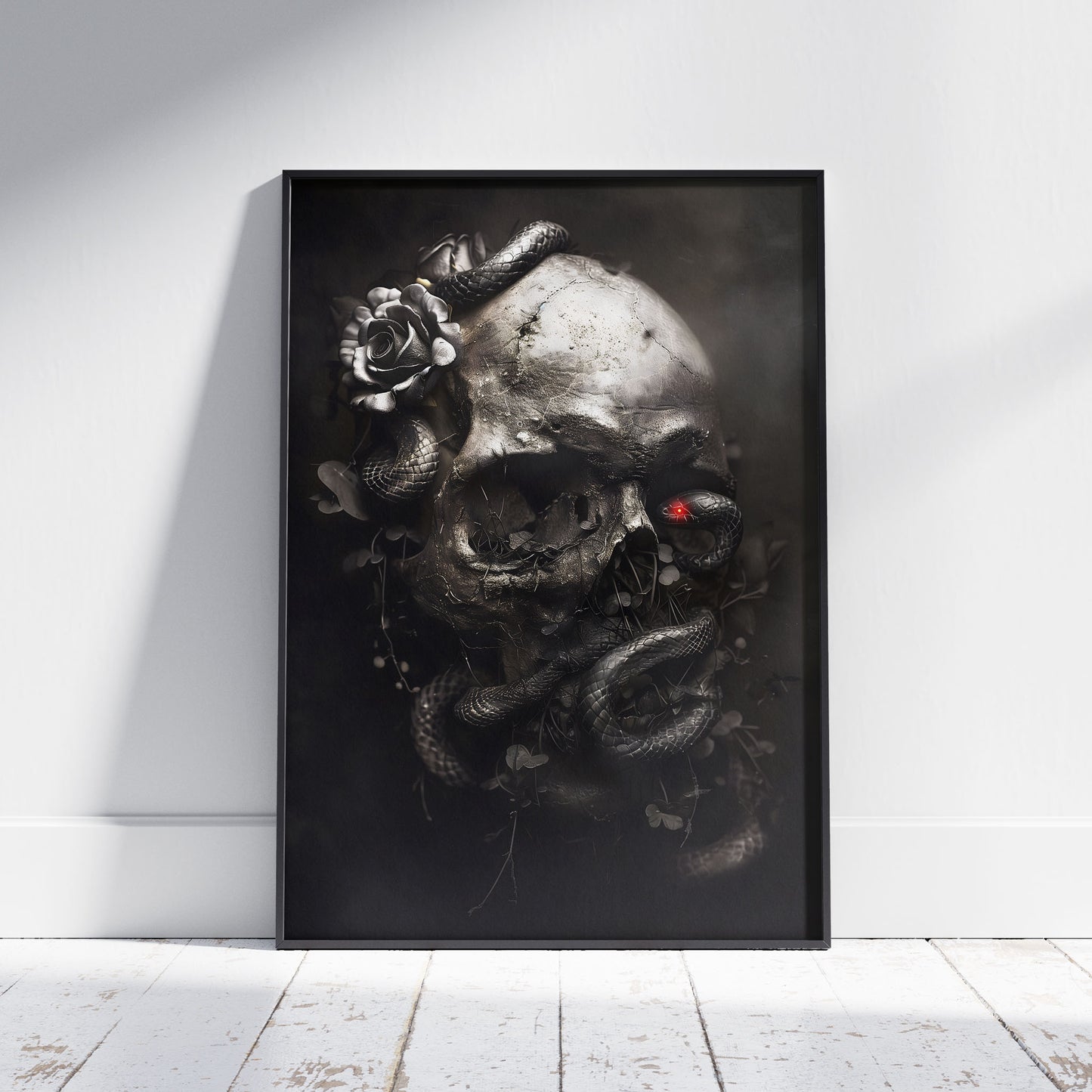
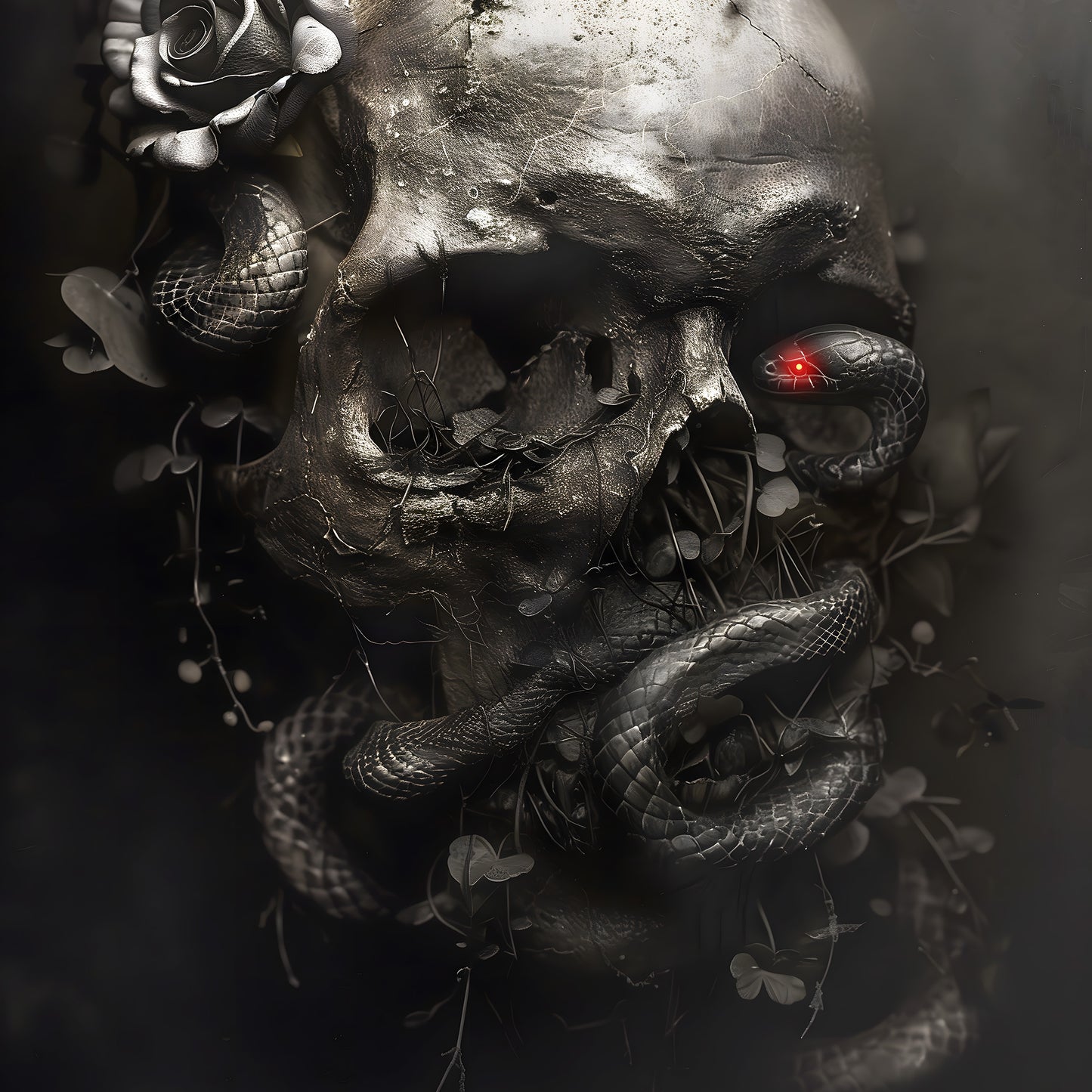
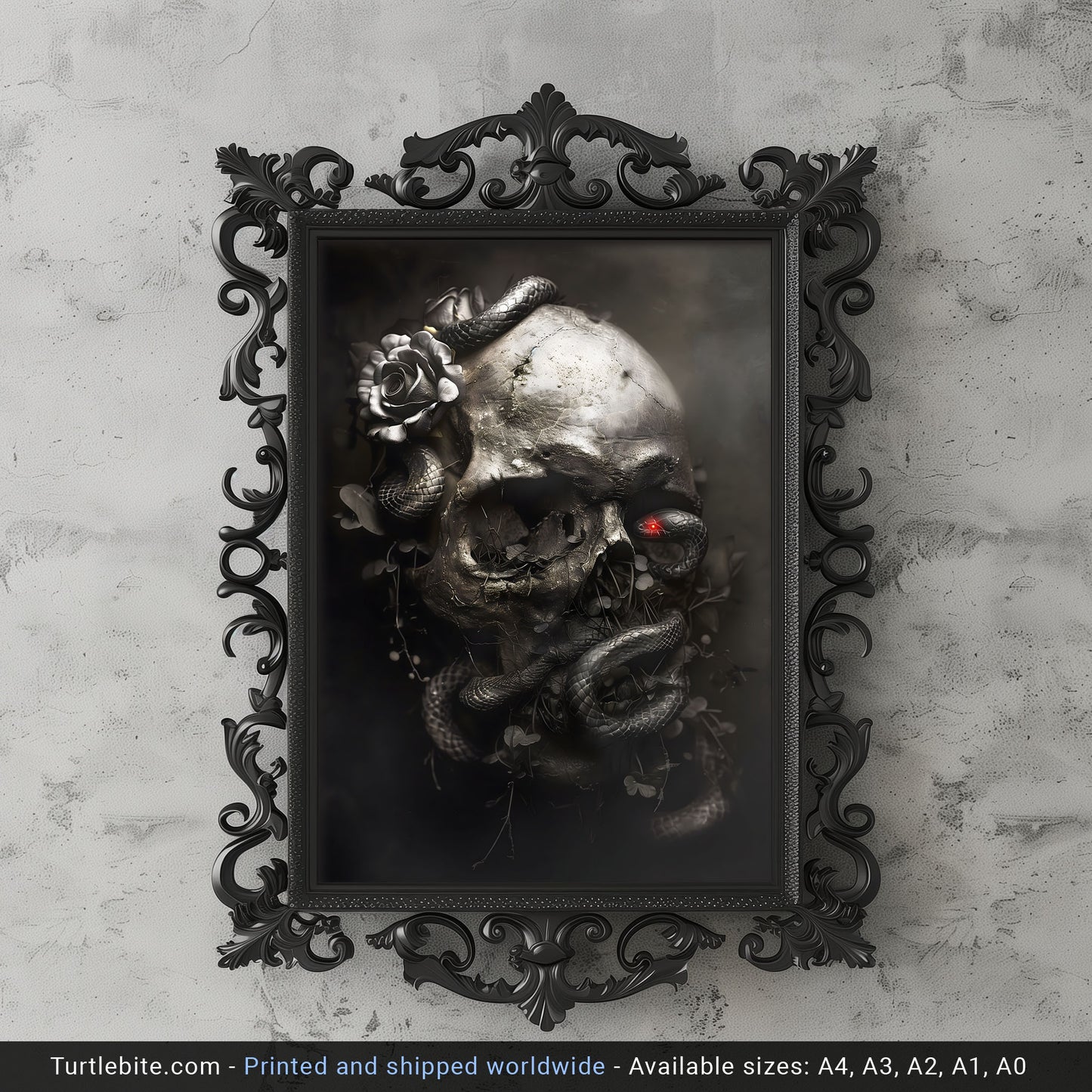
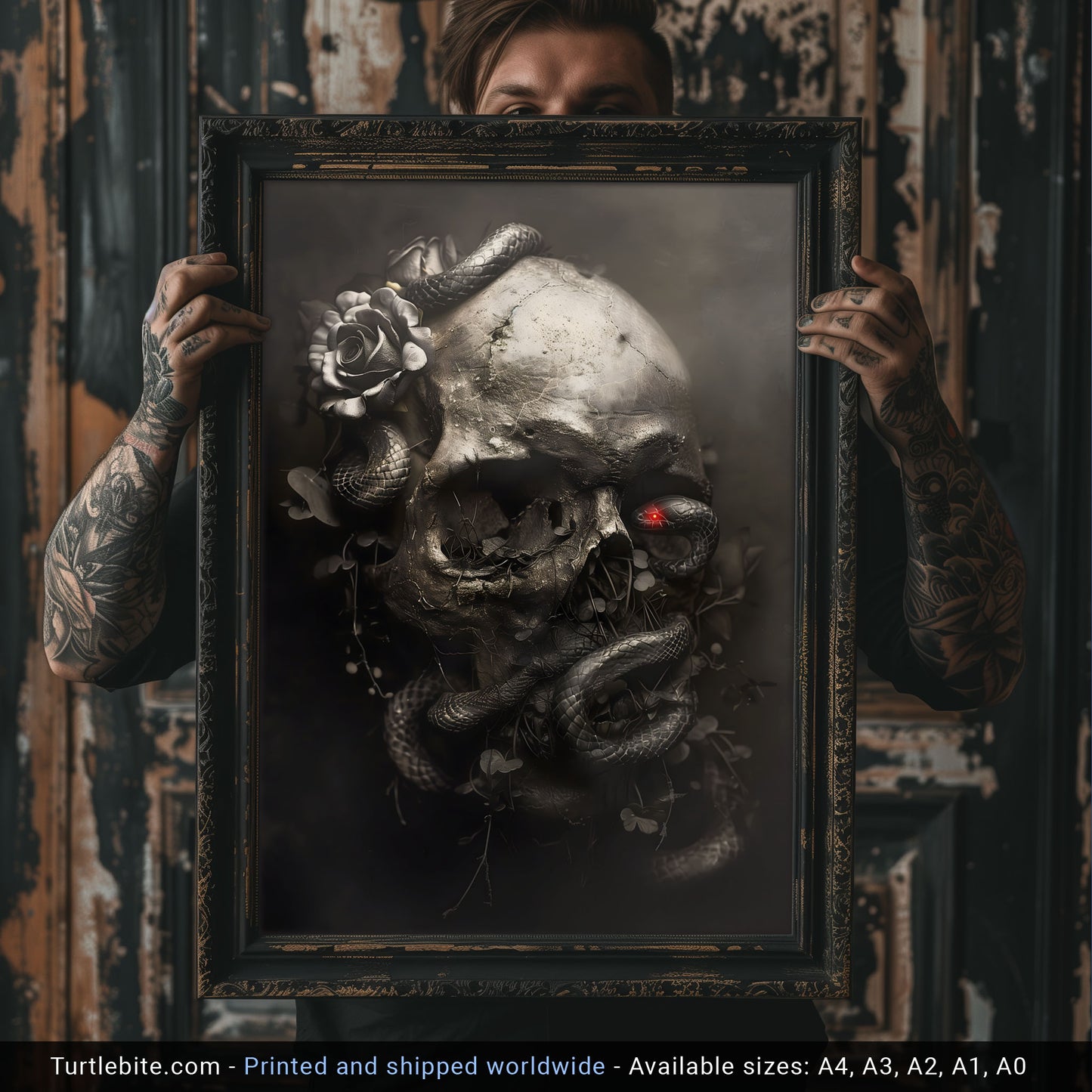
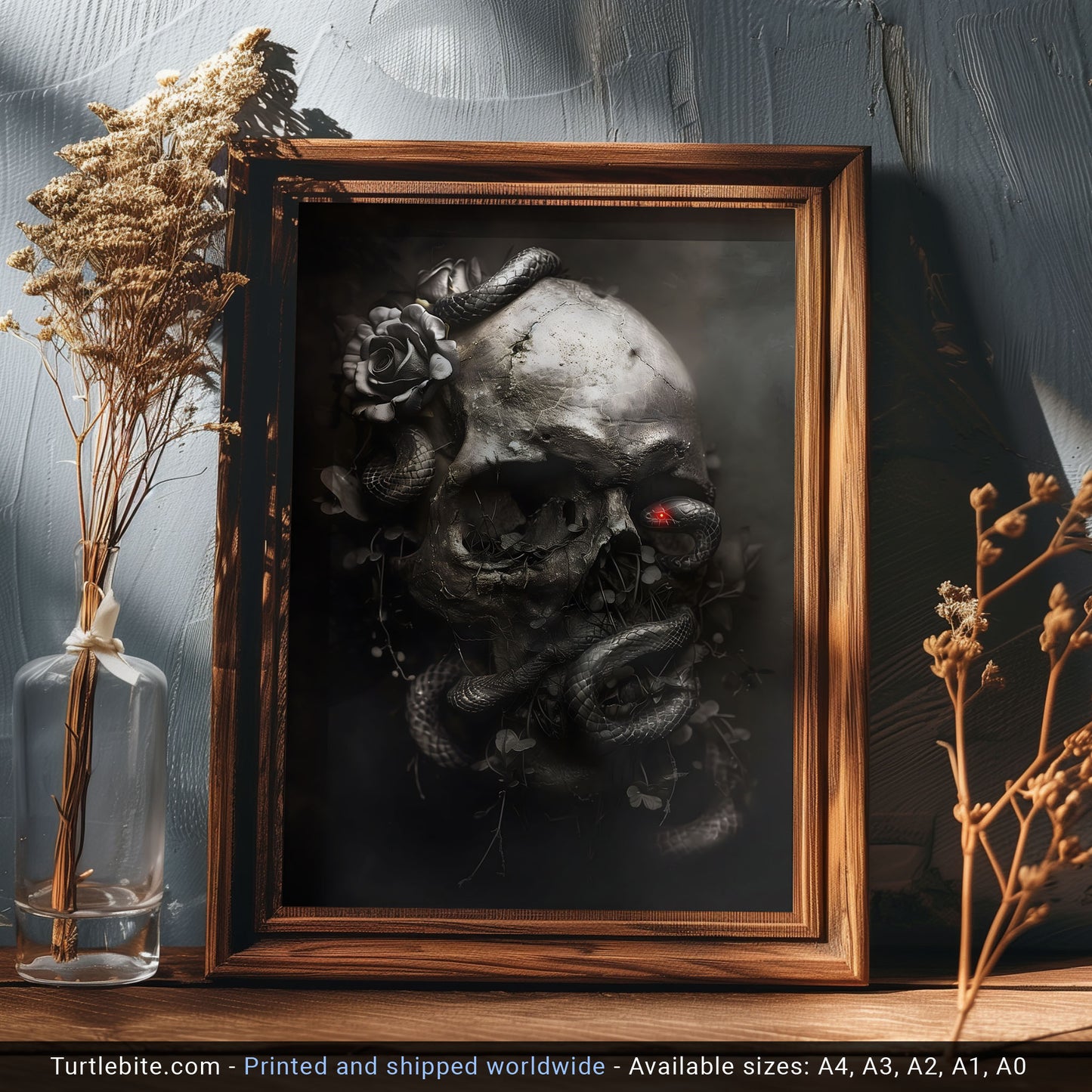
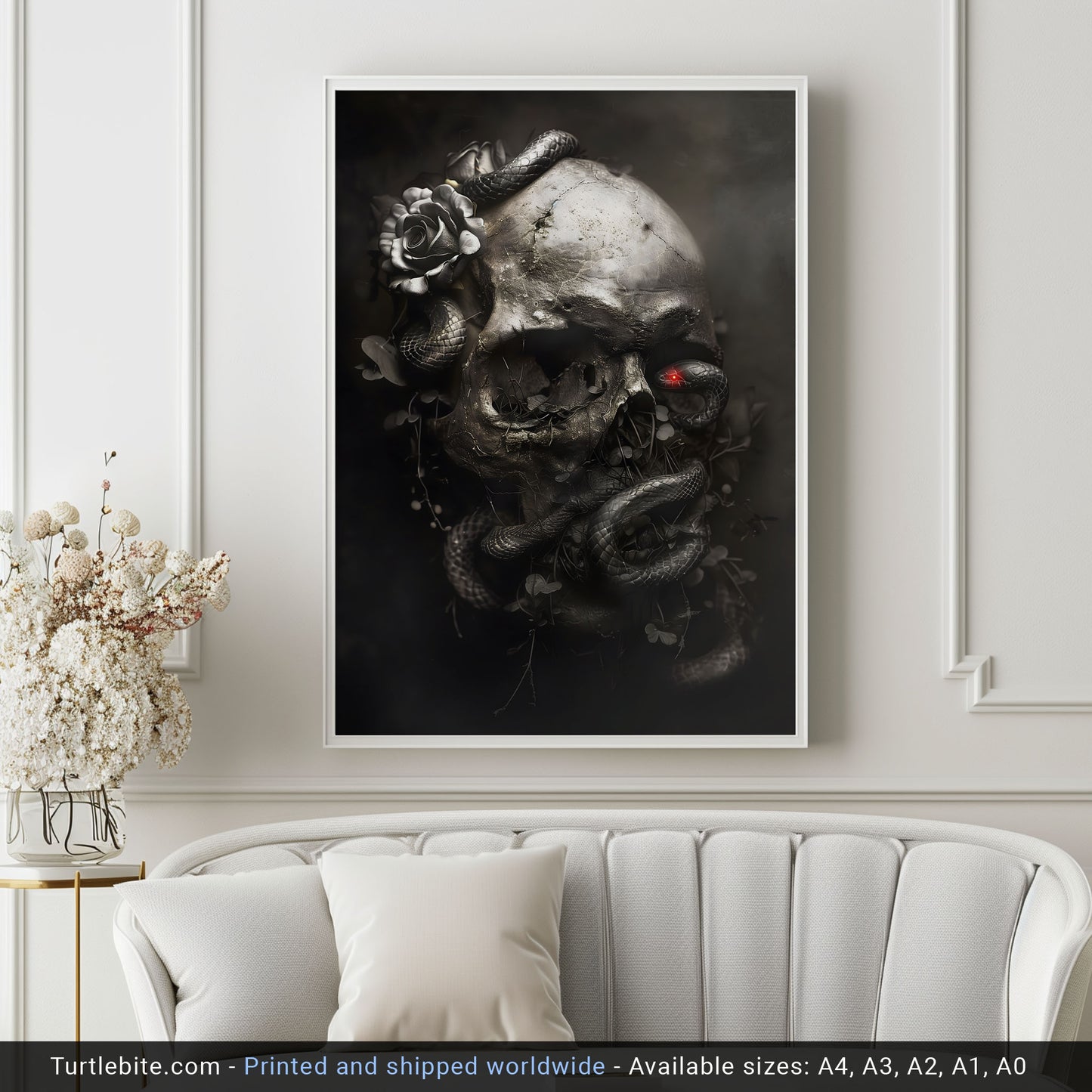
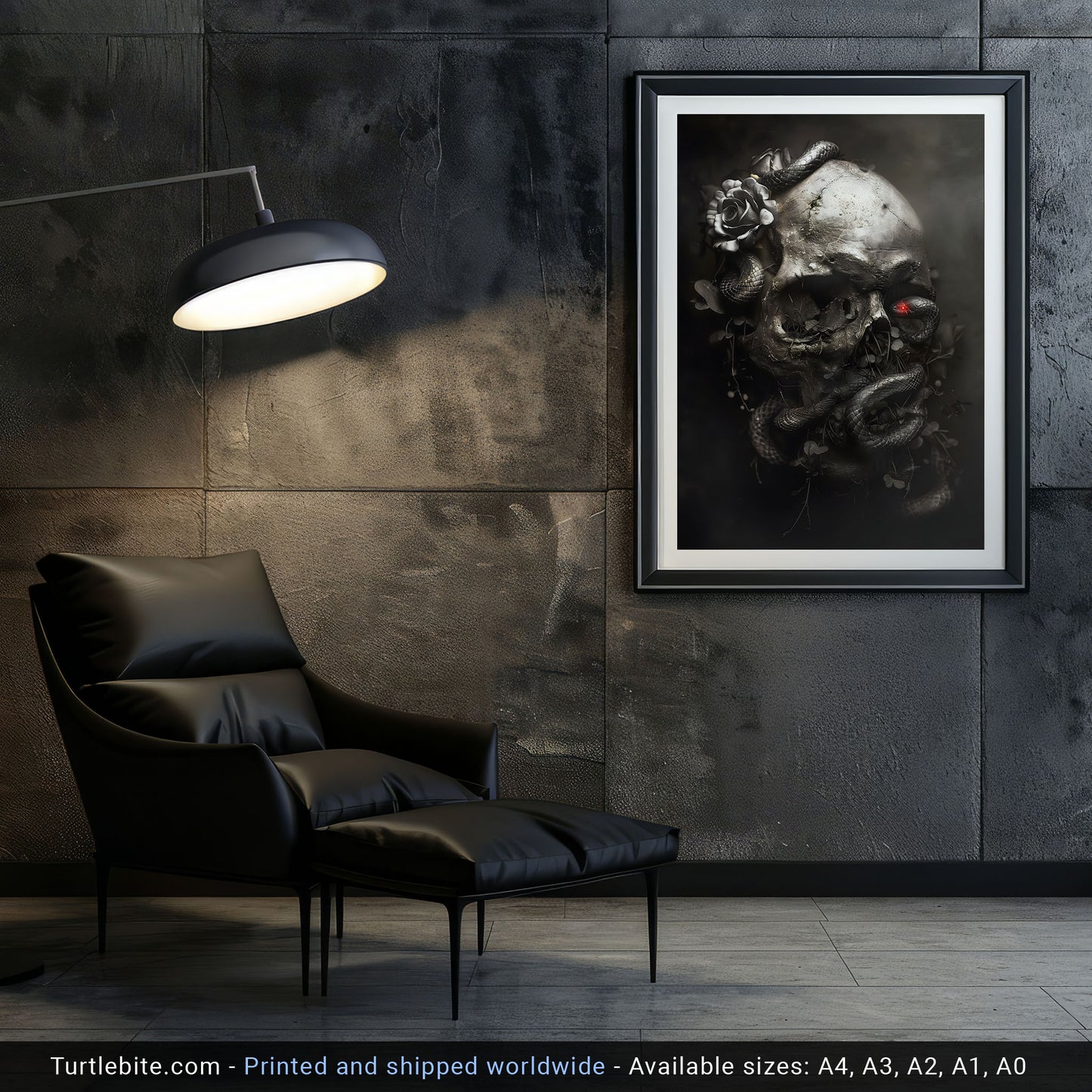
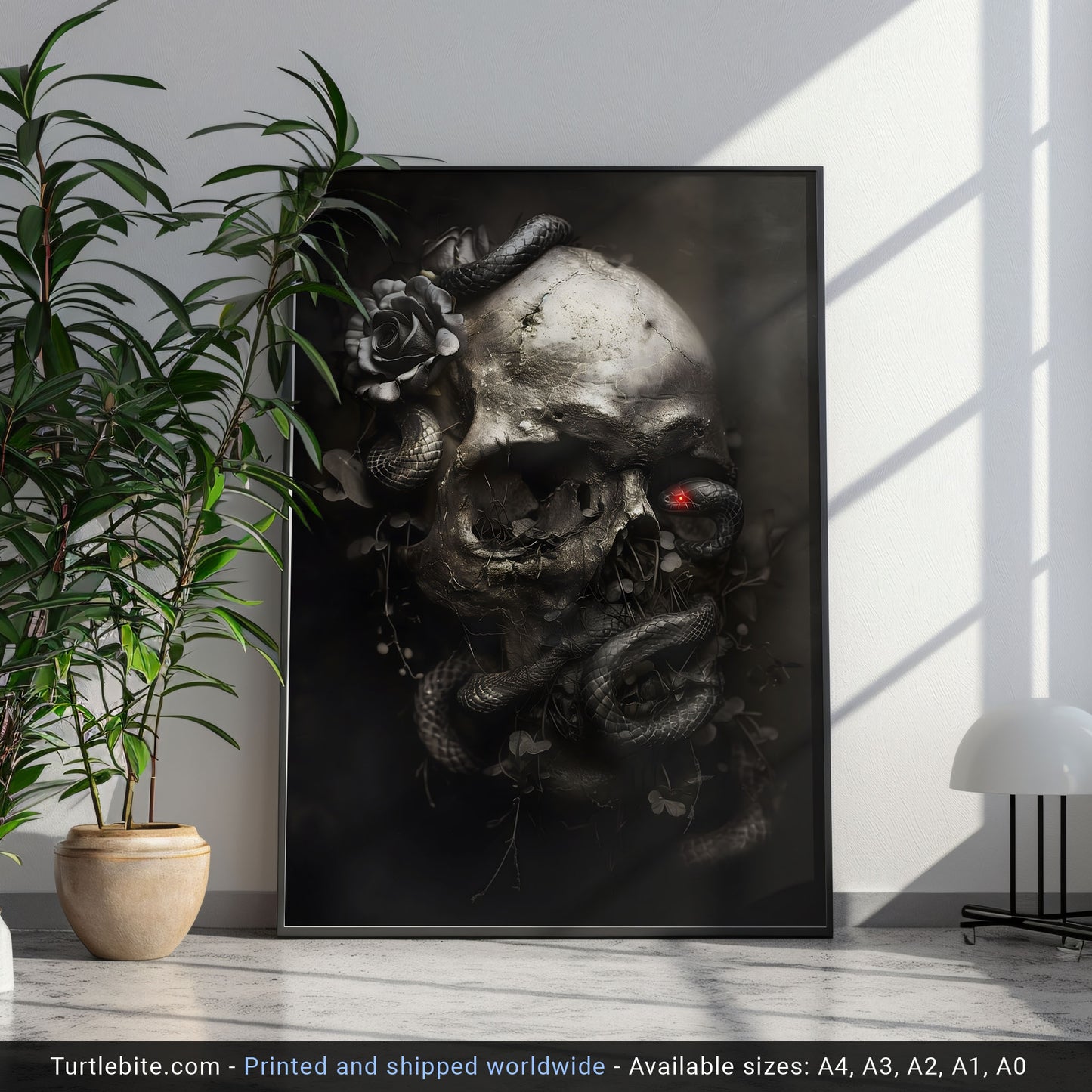
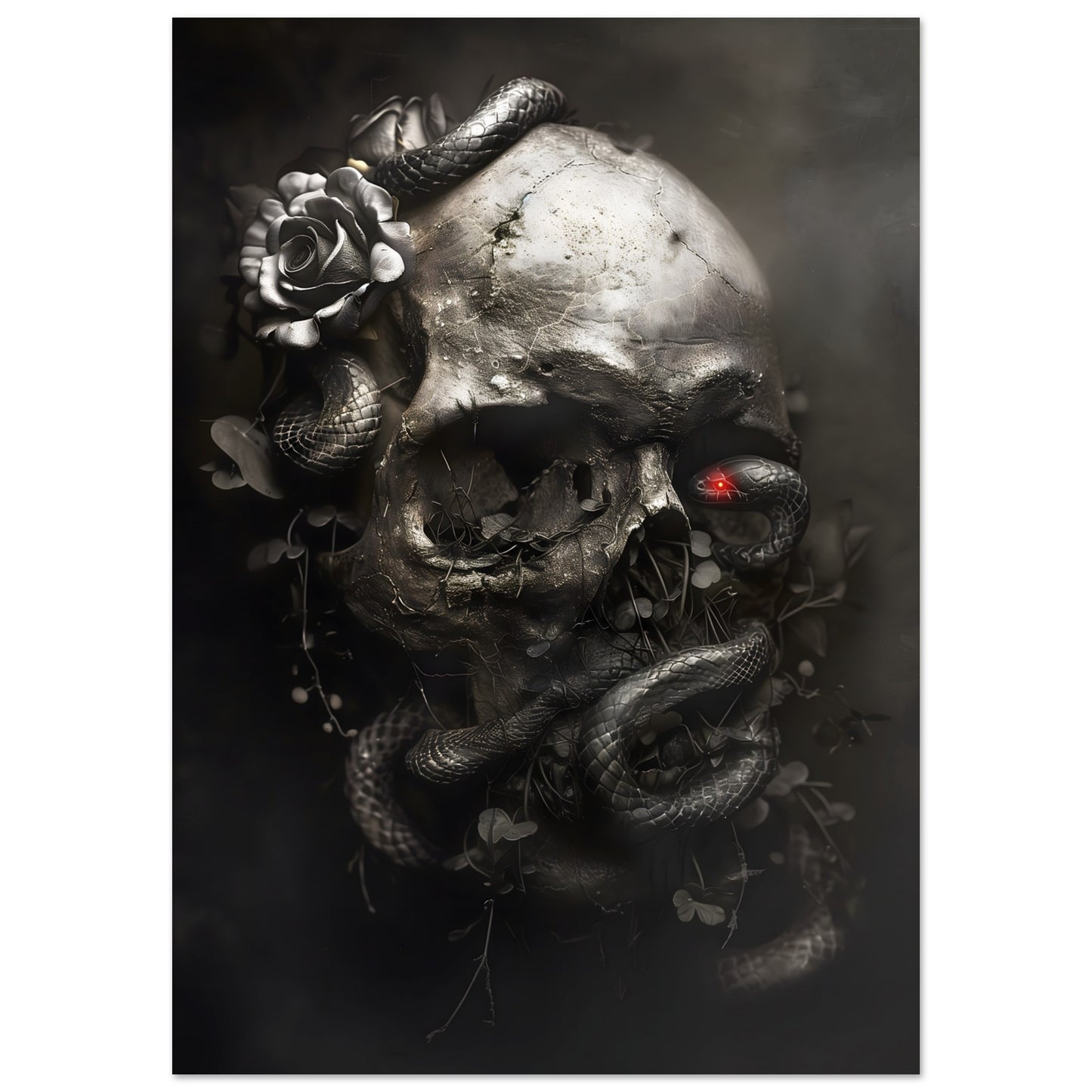
Skull surrounded by dark florals. The Dutch masters invented this composition in the 1600s. Turtlebite made it available for your wall in 2024.
What are the 7 key symbols in a vanitas still life?
Vanitas painters worked from a shared visual vocabulary. Once you learn it, you start reading these paintings like a language. The same objects appear across dozens of works by different artists over more than a century, each carrying a specific meaning. Here are the seven you need to know.
| Symbol | What it means |
|---|---|
| Skull or skeleton | The most direct: the physical body stripped to its permanent form. What you are, after everything else is gone. |
| Hourglass or clock | Time is measurable, finite, and running. The clock does not pause for wealth, status, or good intentions. |
| Wilting or dead flowers | Beauty is temporary. Often placed next to fresh flowers in the same arrangement to make the contrast impossible to miss. |
| Snuffed-out candle | A life ended. The smoke still rising from the wick is the detail that makes it land: it just happened, and it can happen to anything still burning. |
| Soap bubble | The fragility of existence. Beautiful, iridescent, completely real in the moment, and then instantly, irreversibly gone. |
| Rotting or overripe fruit | Abundance does not hold. The same apple at peak ripeness and the same apple one week later are a complete argument about the nature of worldly goods. |
| Books, coins, instruments, and jewels | Knowledge, wealth, artistic achievement, and beauty: the things humans typically treat as the point of being alive. Included to make the argument that they are not, in fact, permanent either. |
The most sophisticated vanitas paintings layer several of these symbols in a single composition. Pieter Claesz's Vanitas Still Life (1630), now at the Mauritshuis in The Hague, pairs a skull with an empty glass, a pocket watch, and a snuffed candle. Every object in it is chosen. Nothing is decoration.

Who painted the most famous vanitas still lifes?
The genre produced some remarkable work across several decades. Jacques de Gheyn II is credited with the earliest known dedicated vanitas panel (1603, now at the Met). Pieter Claesz refined the genre into something quieter and more formally elegant: his still lifes use a limited color palette and subtle lighting to make the mortality argument feel like a whisper rather than a shout. Harmen Steenwijck produced some of the most compositionally complex vanitas paintings of the period, stacking his canvases with layered objects and letting the viewer decode the symbolism.
Less often discussed: women made significant contributions to the genre. Maria van Oosterwijck was one of the most celebrated Dutch painters of the late 17th century, male or female, and her vanitas works show a command of composition and symbolism equal to any of her contemporaries. Her inclusion in the canon is worth noting because the art history textbooks have not always been reliable on this point.
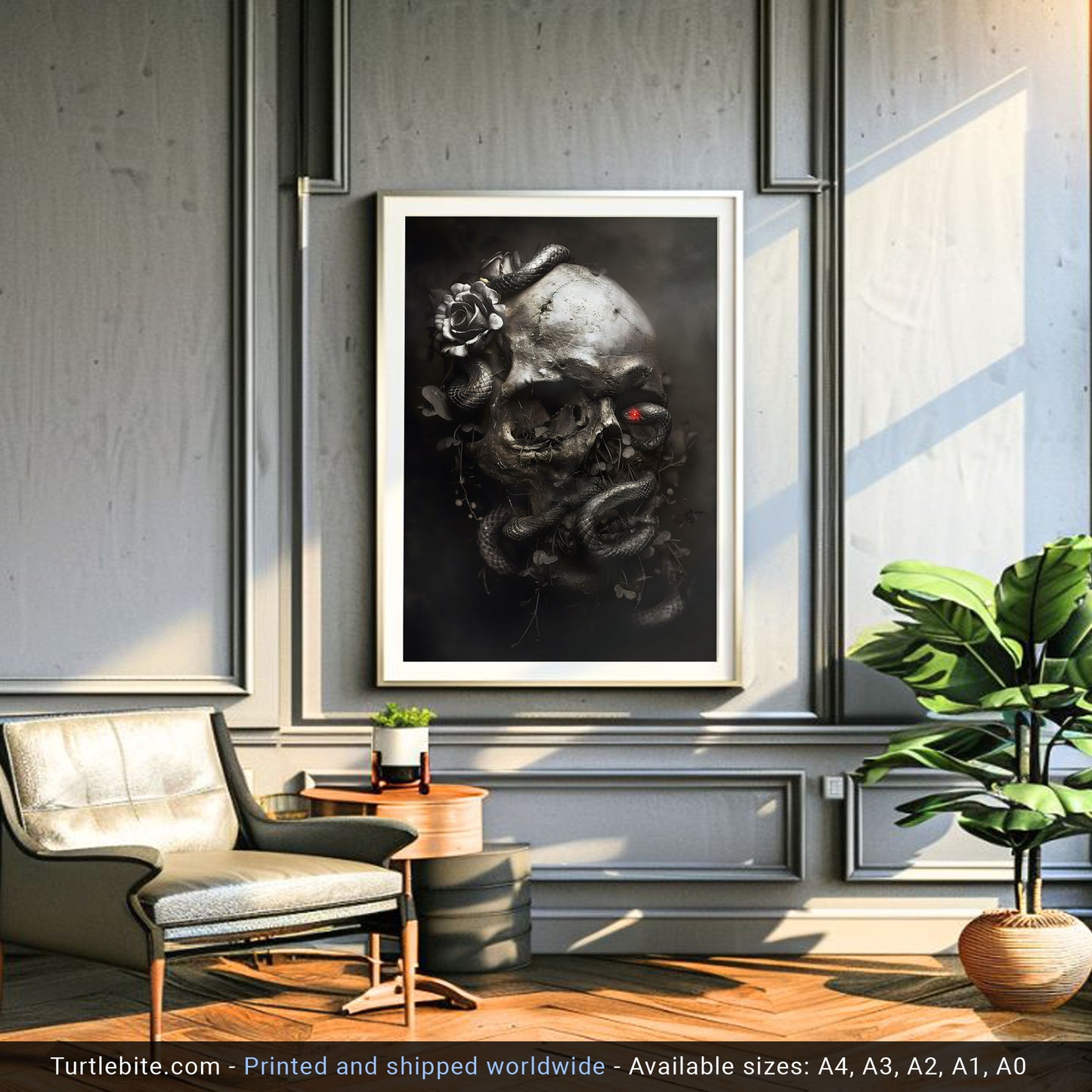
Portrait-format skull in an oil-painting style that sits comfortably in the same visual tradition as Claesz and Steenwijck. No frame required; the atmosphere is built in.
How does vanitas differ from regular still life painting?
Regular still life painting is descriptive. A bowl of fruit is a bowl of fruit: beautifully rendered, technically impressive, and content to simply be a bowl of fruit. Vanitas still life is argumentative. The fruit is there to make a point. The point is that the fruit is going to rot, and so are you, and the painting is making sure you know that while you are looking at it.
The intent separates them completely. Both genres depict everyday objects arranged on a surface. But a straight still life is interested in the thing itself — its color, texture, light. A vanitas painting is interested in what the thing represents. The skull is not there because it looks interesting. It is there because it is the most honest object in the painting.
The objects themselves are also different. Regular still lifes often feature food at its peak: ripe fruit, fresh bread, gleaming seafood. Vanitas paintings deliberately include objects at or past their peak: a candle burning down rather than fresh, fruit beginning to soften, flowers past their prime. The decay is part of the composition, not an accident to be painted around.
Is vanitas art still being made today?
Yes, though it doesn't always announce itself. Contemporary photographers and painters regularly work within the vanitas tradition, often without using the label. A still-life photograph featuring a skull, a smartphone with a cracked screen, and a wilting flower is doing exactly what Pieter Claesz did in 1630: using objects to make an argument about impermanence. The objects just updated to fit the current century. The argument didn't need updating; it still holds.
In dark art and gothic aesthetics specifically, the vanitas vocabulary never really left. Skulls, decay, mortality symbols — these are the grammar of an entire visual culture that runs directly through the vanitas tradition. When you see a dark art print featuring a skull surrounded by dead flowers, you are looking at a direct descendant of 17th-century Dutch painting. The chain is unbroken; it just got cheaper to print and easier to ship. :)

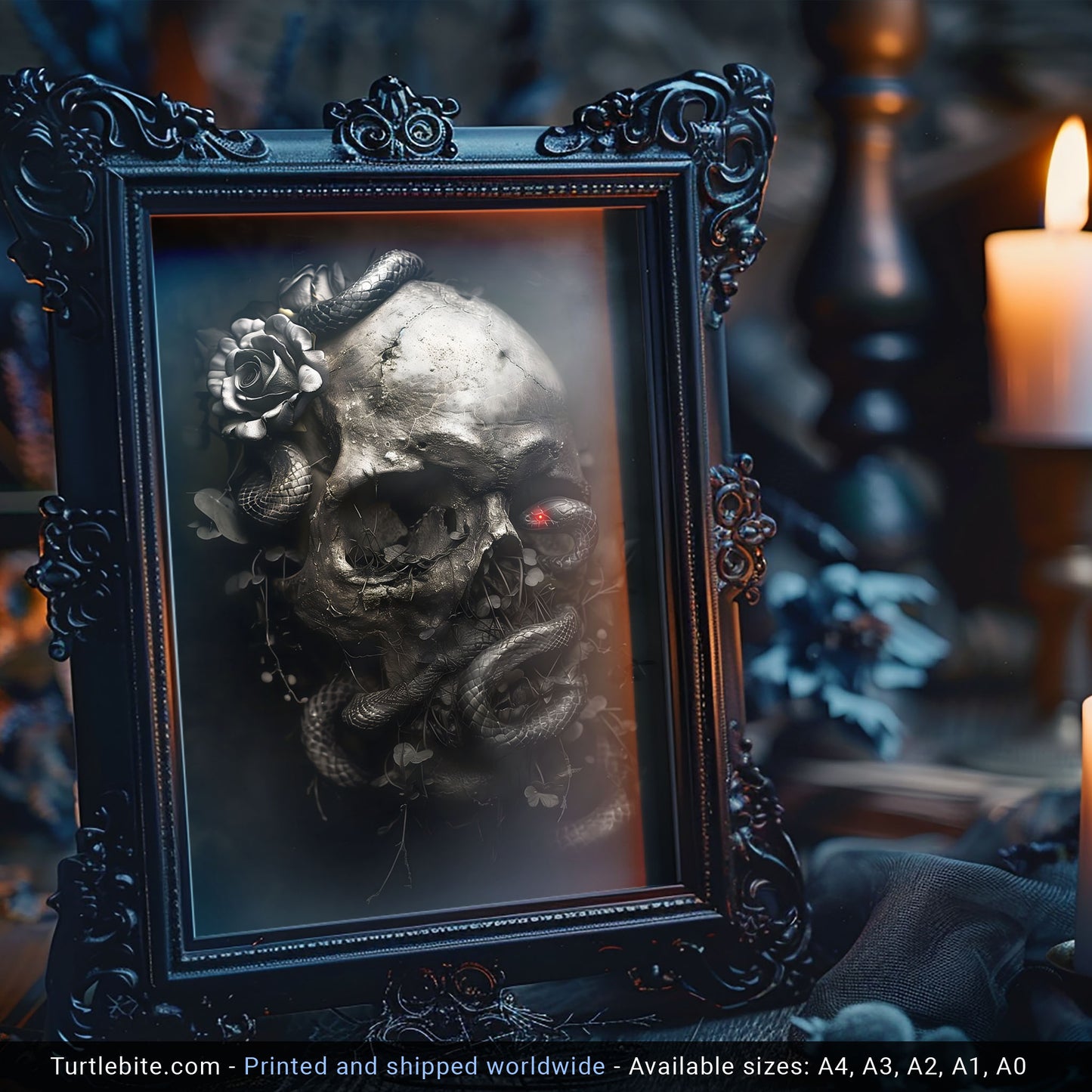
Surreal skulls and tentacles. Where the 17th century used hourglasses and soap bubbles, this one uses the visual language of the 21st. The message is the same.
Frequently asked questions
What does the vanitas still life symbolize?
A vanitas still life symbolizes the transience of life, the futility of earthly wealth and pleasure, and the certainty of death. Each object in the painting carries a specific meaning: skulls represent mortality, hourglasses represent passing time, wilting flowers represent the decay of beauty, snuffed candles represent a life ended, and soap bubbles represent the fragility of existence. The genre's overall argument is that none of the things humans typically value — wealth, knowledge, beauty, pleasure — ultimately last.
What is the meaning of Pieter Claesz's Vanitas Still Life?
Pieter Claesz's Vanitas Still Life (1630) uses four objects to build its argument: a skull, an empty wine glass, a pocket watch, and a snuffed-out candle. The skull is mortality. The empty glass is sensory pleasure, spent. The watch is time, which has been running the whole time you were enjoying yourself. The candle's smoke still rising from the wick suggests the moment of ending has just passed. Together they form a single quiet statement: this is all that remains.
How does vanitas differ from other still life painting?
Regular still life painting depicts objects to celebrate their appearance. Vanitas still life depicts objects to make an argument about impermanence. The intent is the difference. A bowl of fruit in a standard still life is there because it is beautiful. The same fruit in a vanitas painting is there because it is going to rot, and the painter wants you to hold both facts in your mind at once.
What does vanitas mean in Latin?
Vanitas is Latin for "vanity" in the sense of emptiness or worthlessness, not self-admiration. It comes from the opening of the Book of Ecclesiastes in the Latin Vulgate Bible: vanitas vanitatum, omnia vanitas, meaning "vanity of vanities, all is vanity." In context, the word describes the futility of earthly existence rather than excessive pride in one's appearance.
What is the difference between vanitas and memento mori?
Memento mori is the broader philosophical and artistic tradition of using death imagery as a reminder of mortality. Vanitas is a specific subgenre of still-life painting within that tradition, developed in 16th and 17th-century Europe, with its own cast of recurring symbols and its own formal conventions. All vanitas paintings are memento mori; not all memento mori art is vanitas. If you want the full history of the memento mori tradition, we wrote about it here.
The Vanitas Tradition. For Your Wall.
Turtlebite makes dark art prints in the memento mori and vanitas tradition. Skull, florals, decay, and a healthy disregard for cheerful home decor. Printed near you, shipped worldwide. 4.94 stars across 272 reviews.
Browse the Collection →Fast worldwide shipping. Produced locally near you.