
What Is Dark Cottagecore? The 7 Elements That Define the Aesthetic (and How to Decorate With It)
ChristianDark cottagecore is cottagecore with the lights turned down and the ravens let in. It keeps everything that makes the romanticized rural aesthetic appealing – the closeness to nature, the handmade textures, the wood and linen and quiet – and swaps out the sunny meadows for misty forests, the wildflowers for mushrooms and moss, and the cheerfulness for something moodier, witchier, and more willing to acknowledge that nature also decays things. Also known as cottagegore or cottagegoth, it sits at the crossroads of cottagecore, dark academia, and witchcore.
If regular cottagecore is Sleeping Beauty's cottage, dark cottagecore is the witch's house at the edge of the wood. Same building materials, very different vibe.
In this article
- What is dark cottagecore called?
- The 7 defining elements
- Dark cottagecore vs. regular cottagecore
- How to decorate in dark cottagecore style
- Dark cottagecore vs. goblincore vs. whimsigoth
- FAQ
What is dark cottagecore called?
The aesthetic goes by several names. Cottagegore and cottagegoth are used interchangeably across Pinterest and TikTok, with cottagegore being the more recognized term for the macabre-leaning version. Aesthetics Wiki defines cottagegoth as a darker counterpart to cottagecore, pulling in elements of witchcore, dark academia, and forest folklore.
The naming matters because dark cottagecore isn't just regular cottagecore with a dark filter applied. It has specific motifs, a distinct relationship with nature's less cheerful side, and a witchy, ritualistic undertone that standard cottagecore doesn't have. Think less "morning bread-baking in a sunlit kitchen" and more "drying herbs by moonlight because you know what they do."
What are the 7 defining elements of dark cottagecore?
These are the visual and thematic building blocks. Hit four or more and you're definitively in dark cottagecore territory.
1. A dark, earthy color palette. Deep charcoal, forest green, burnt umber, burgundy, and black — always warmed by candlelight rather than daylight. No pastels. No white linen. The palette draws from the forest floor at dusk rather than a sunlit meadow at noon.
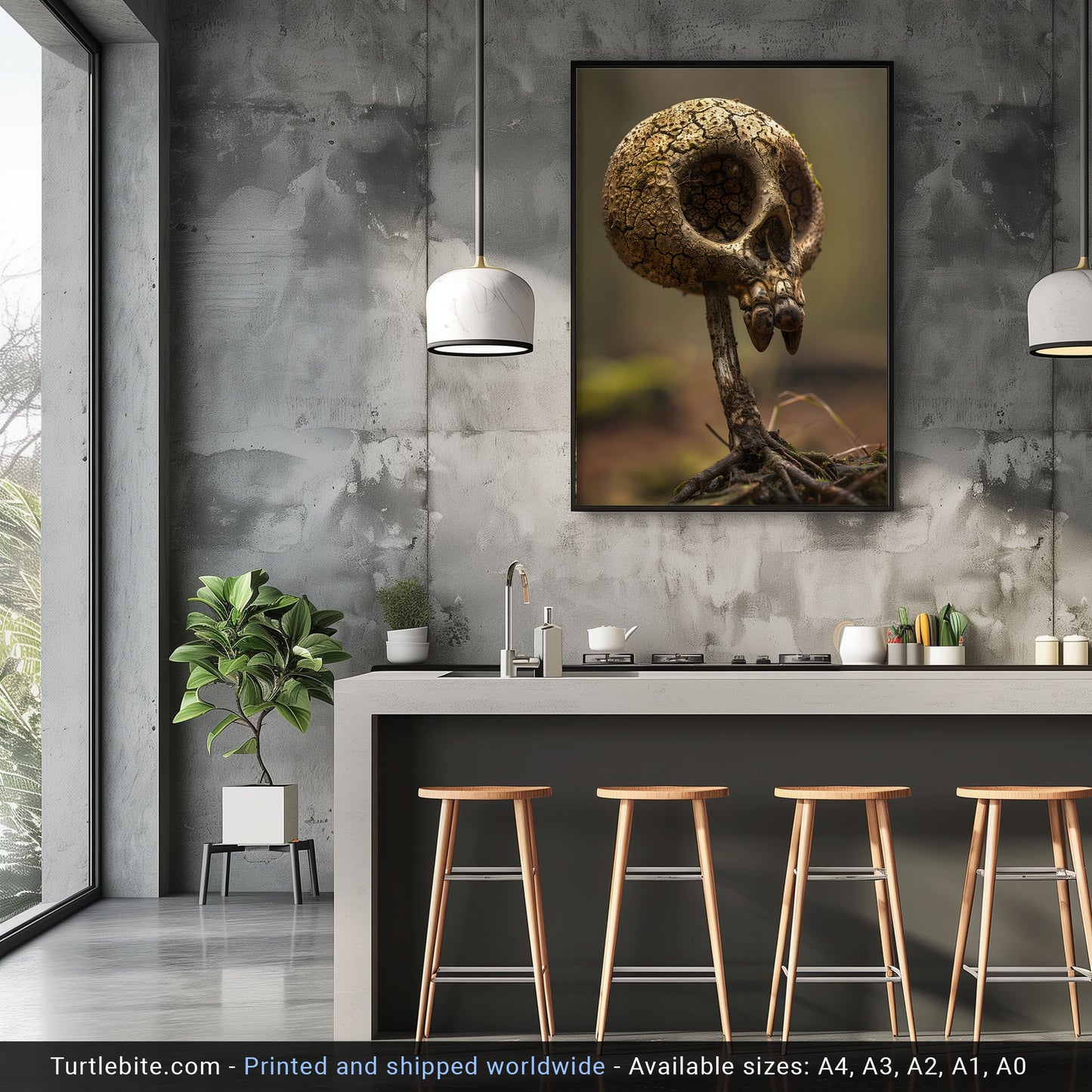
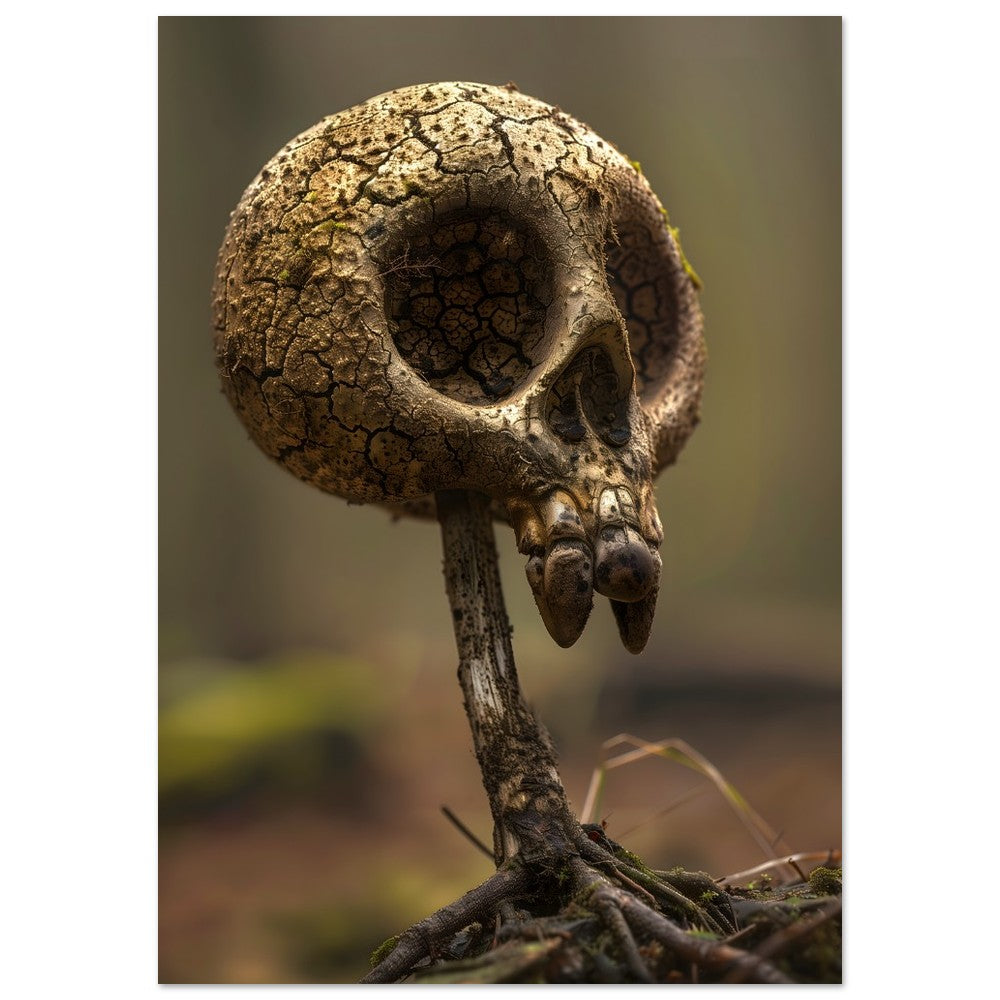
2. Mushrooms and fungi. The single most recognizable dark cottagecore motif. Amanita muscaria (the classic red-capped fairy-tale mushroom), oyster mushrooms, bioluminescent species, fungi growing from wood. Mushrooms appear on wall art, textiles, ceramics, and clothing. They work because they sit perfectly at the intersection of beautiful, strange, and slightly ominous. The aesthetic's unofficial mascot.

A robed forest figure atop a glowing mushroom in a dim, atmospheric wood. Pure dark cottagecore, ready to hang.
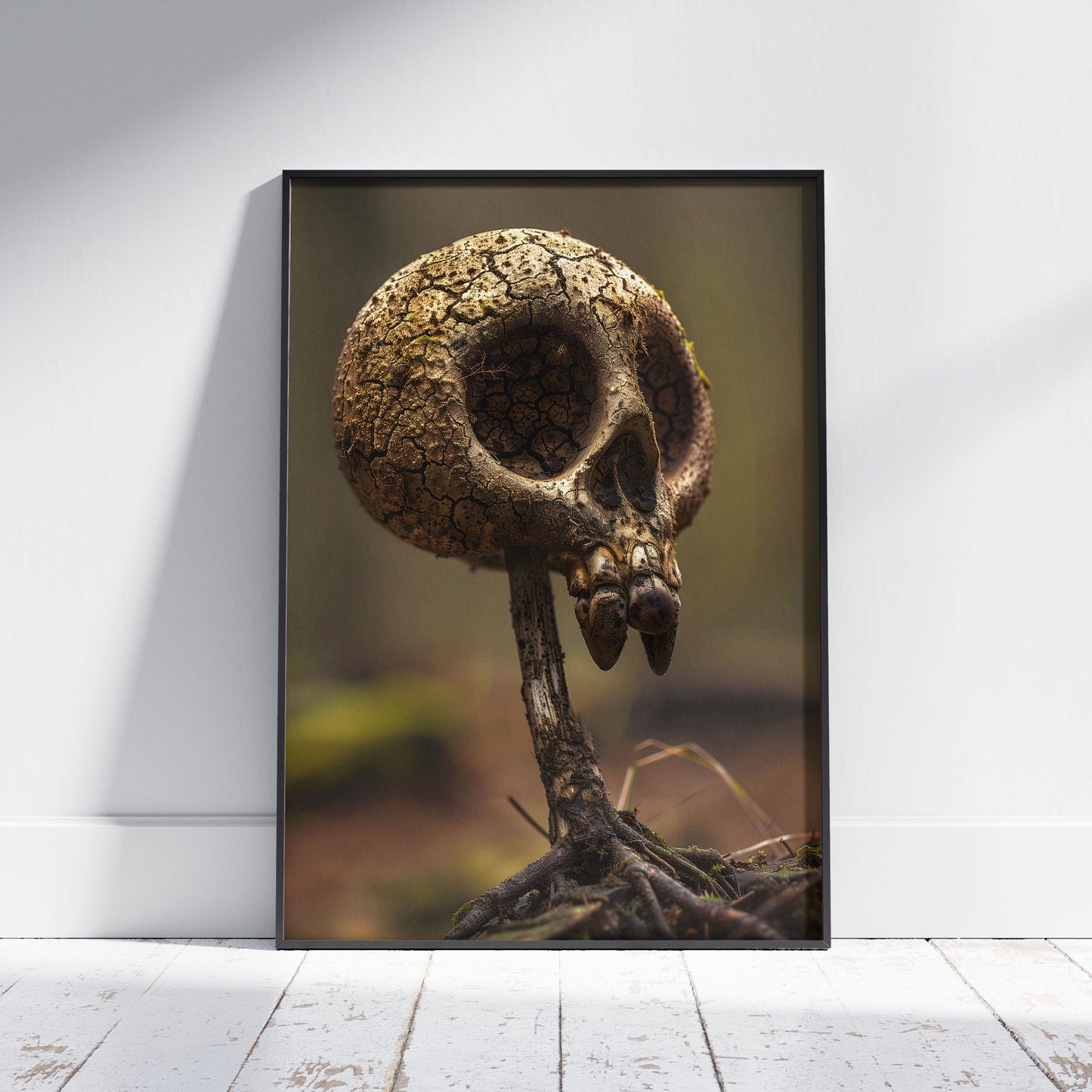
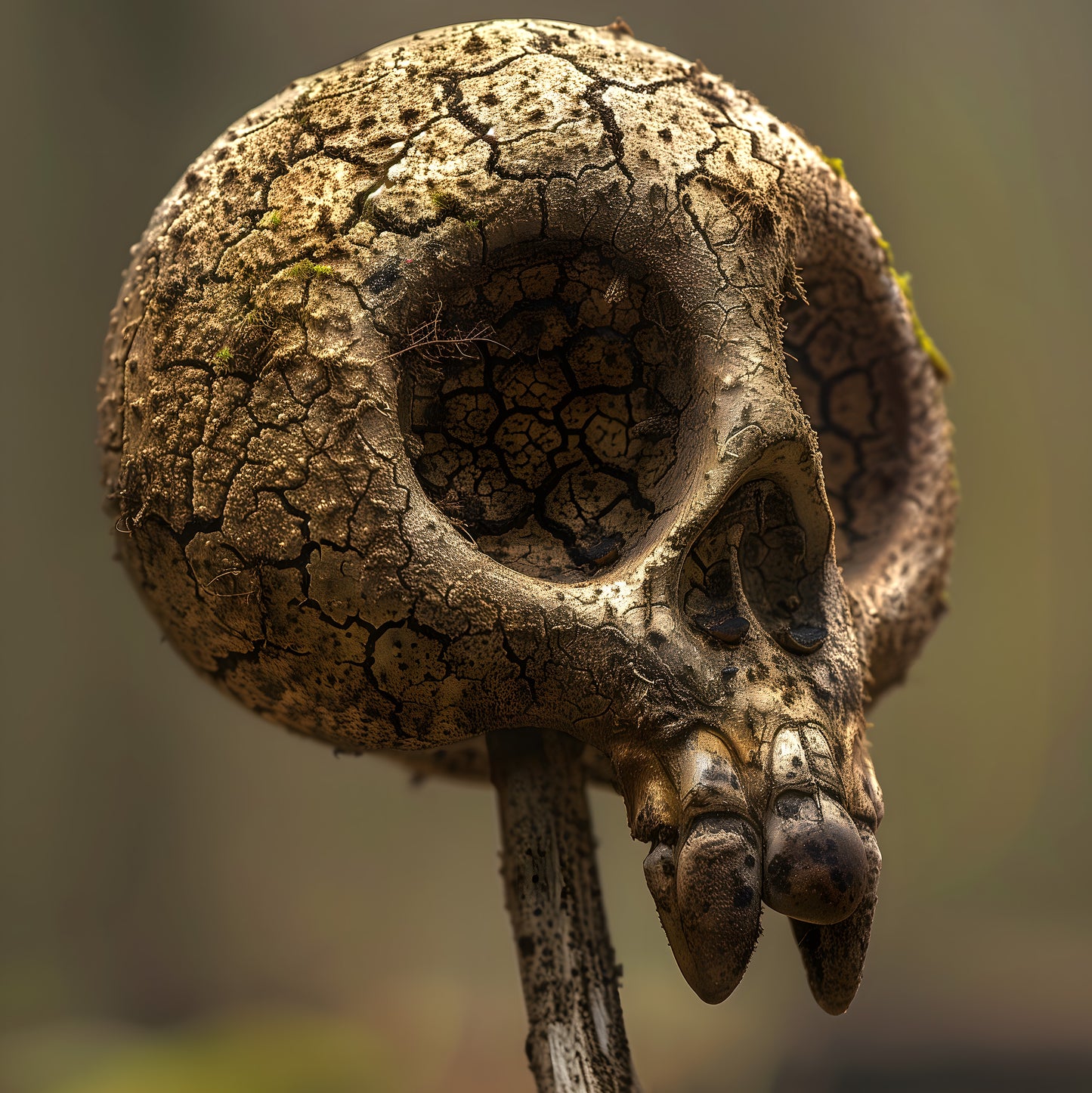
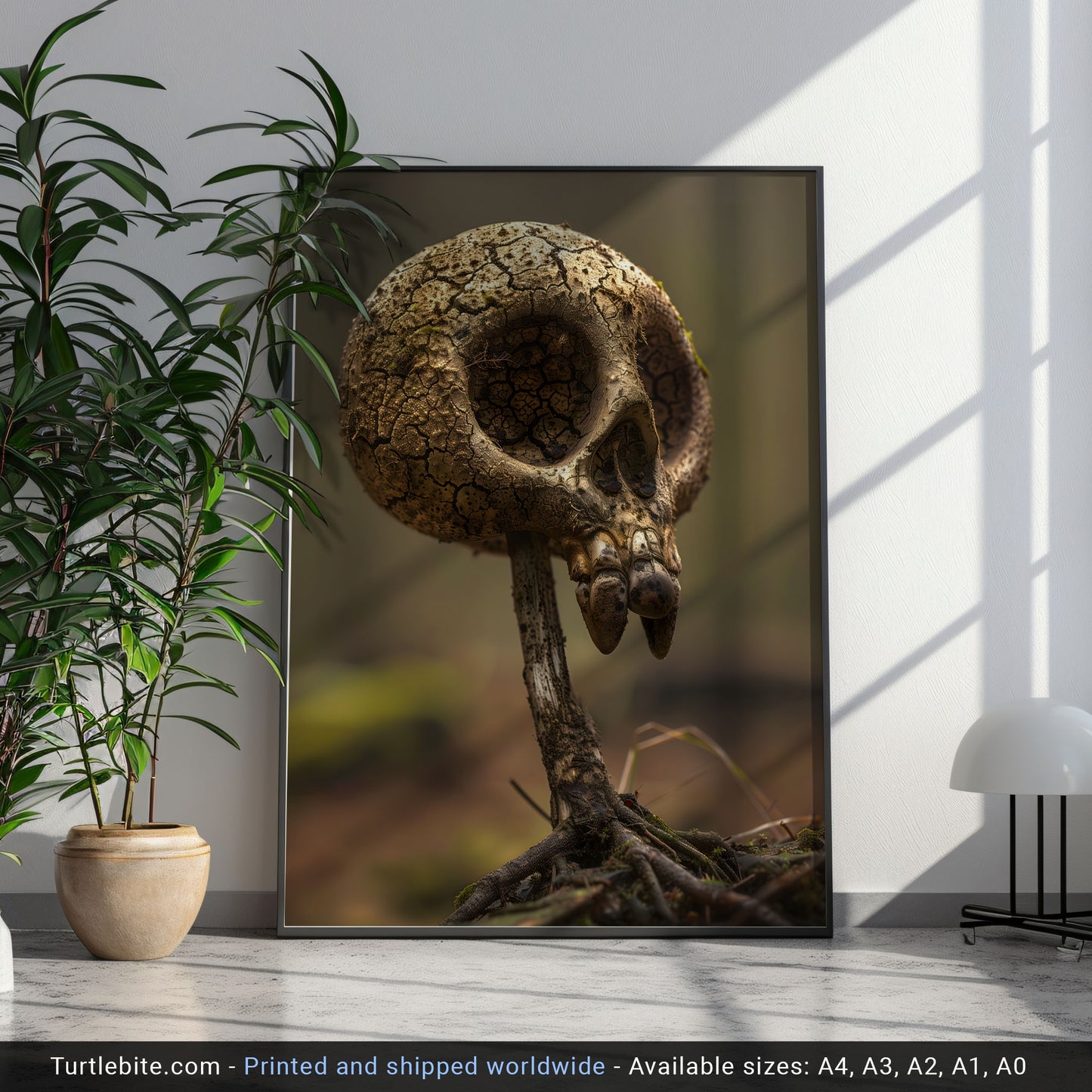
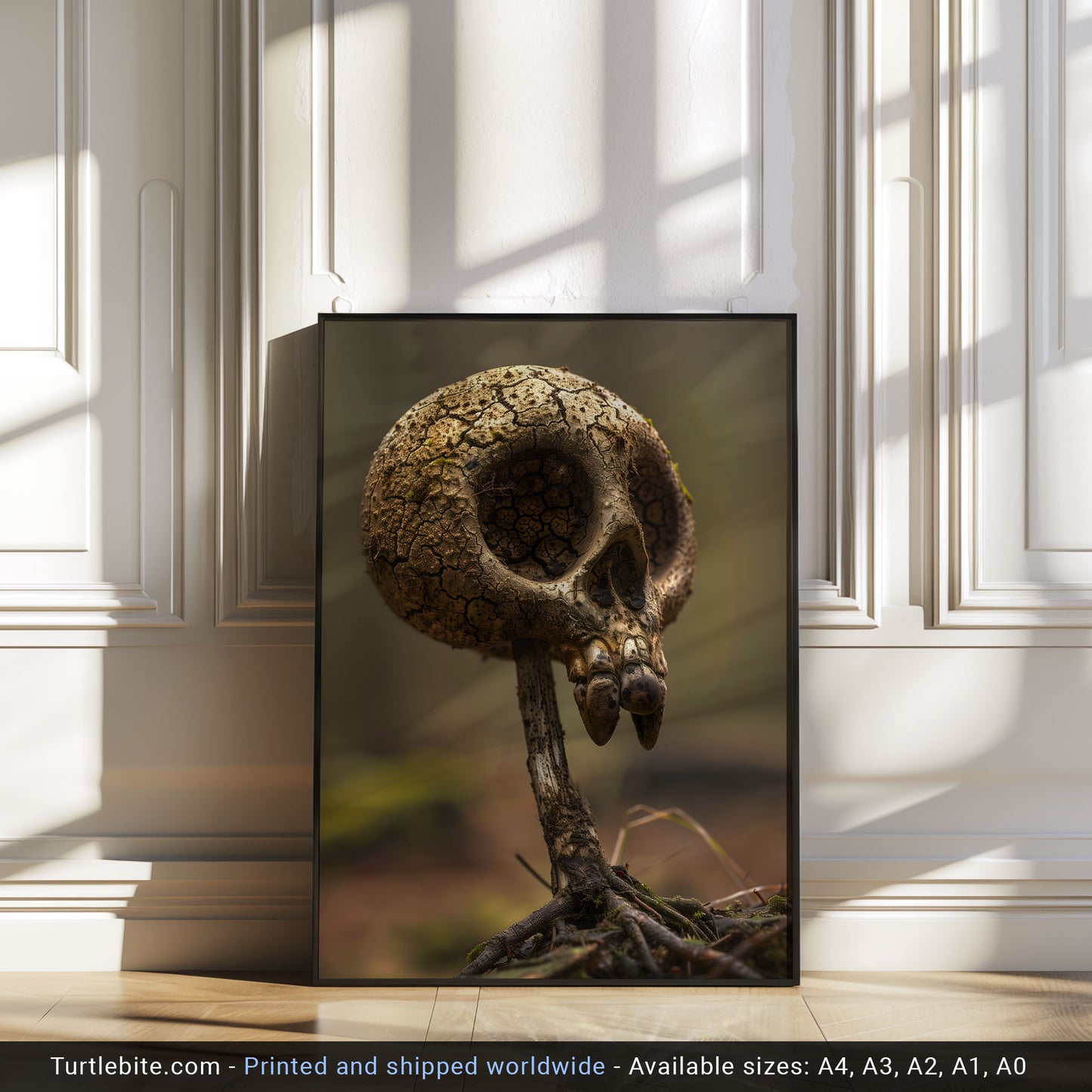
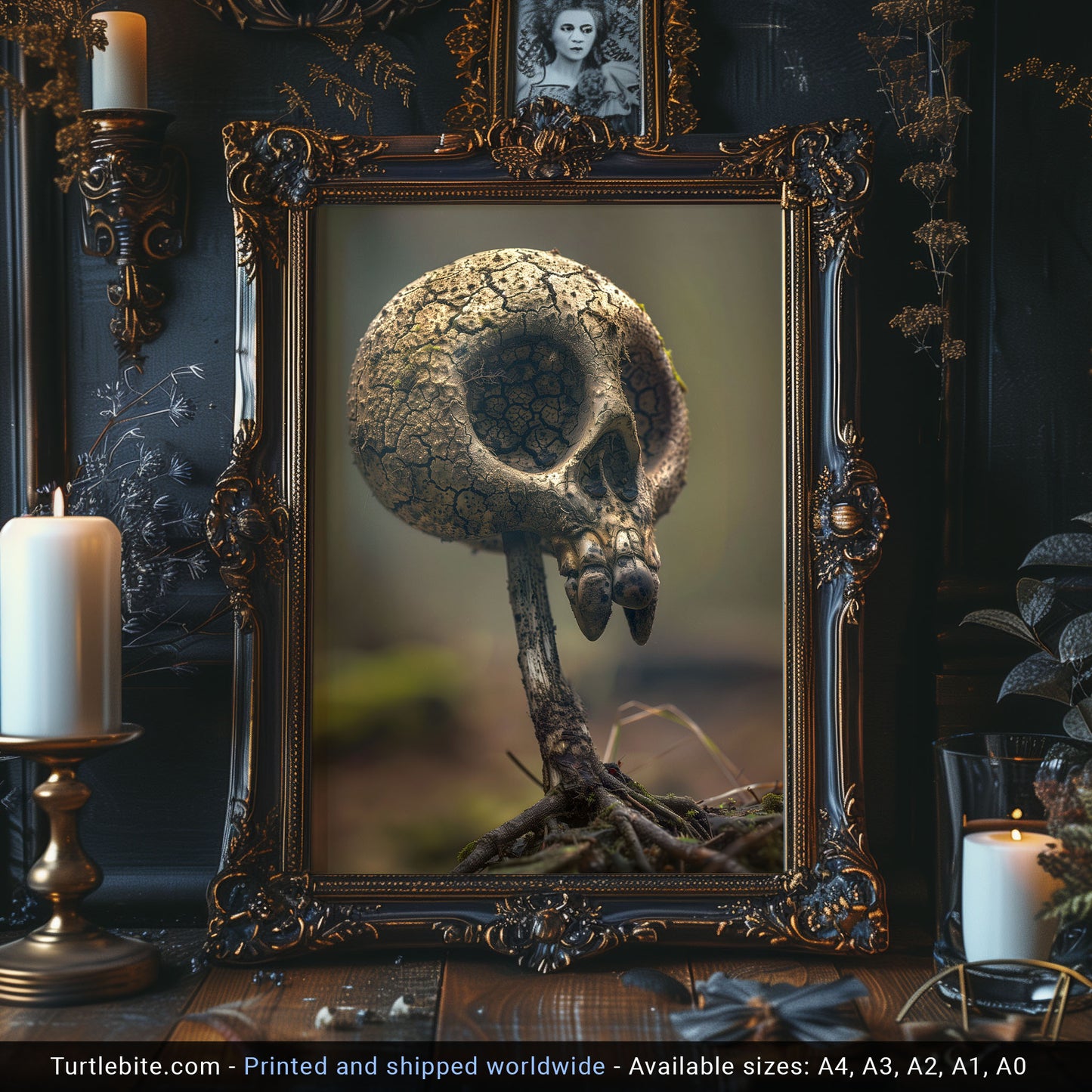
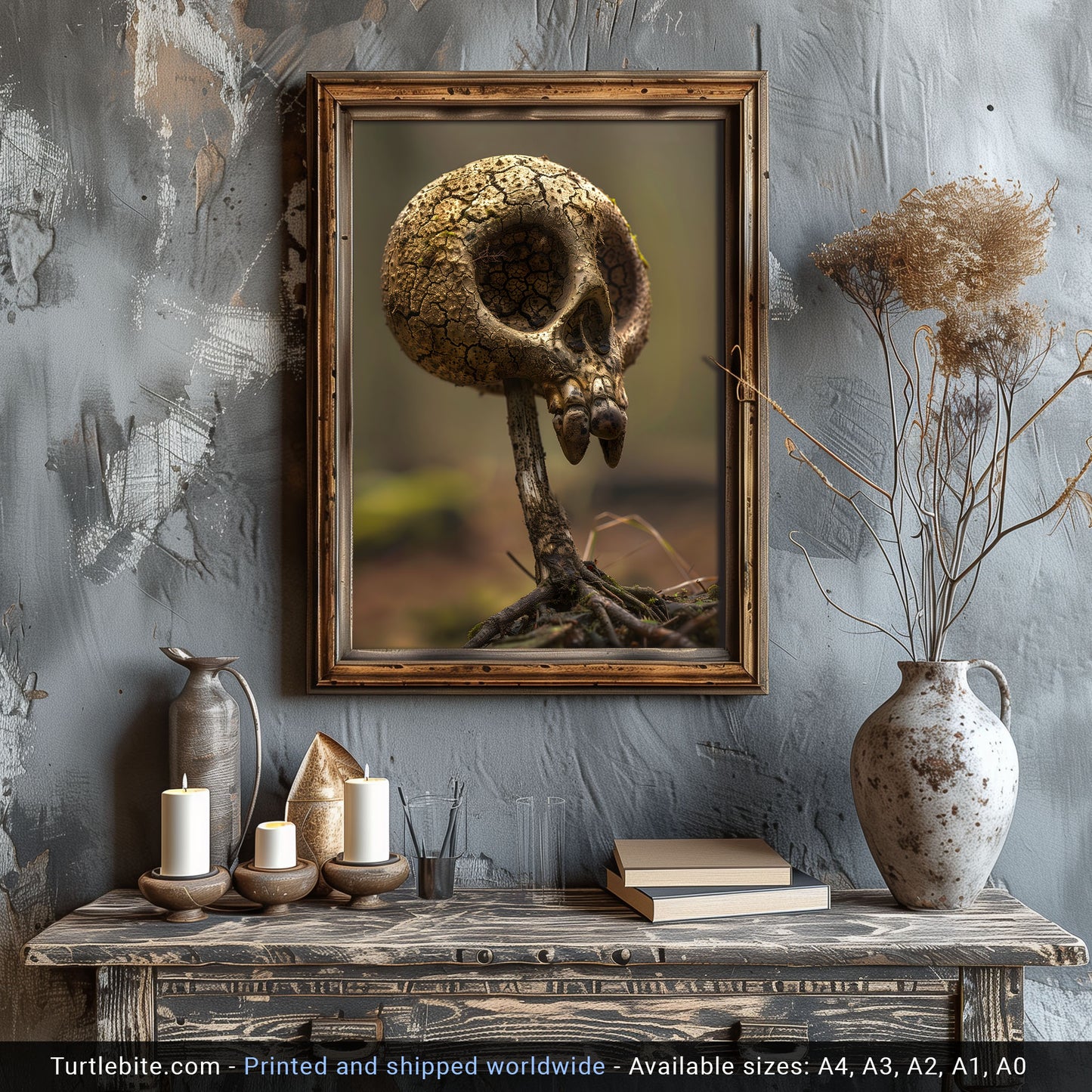
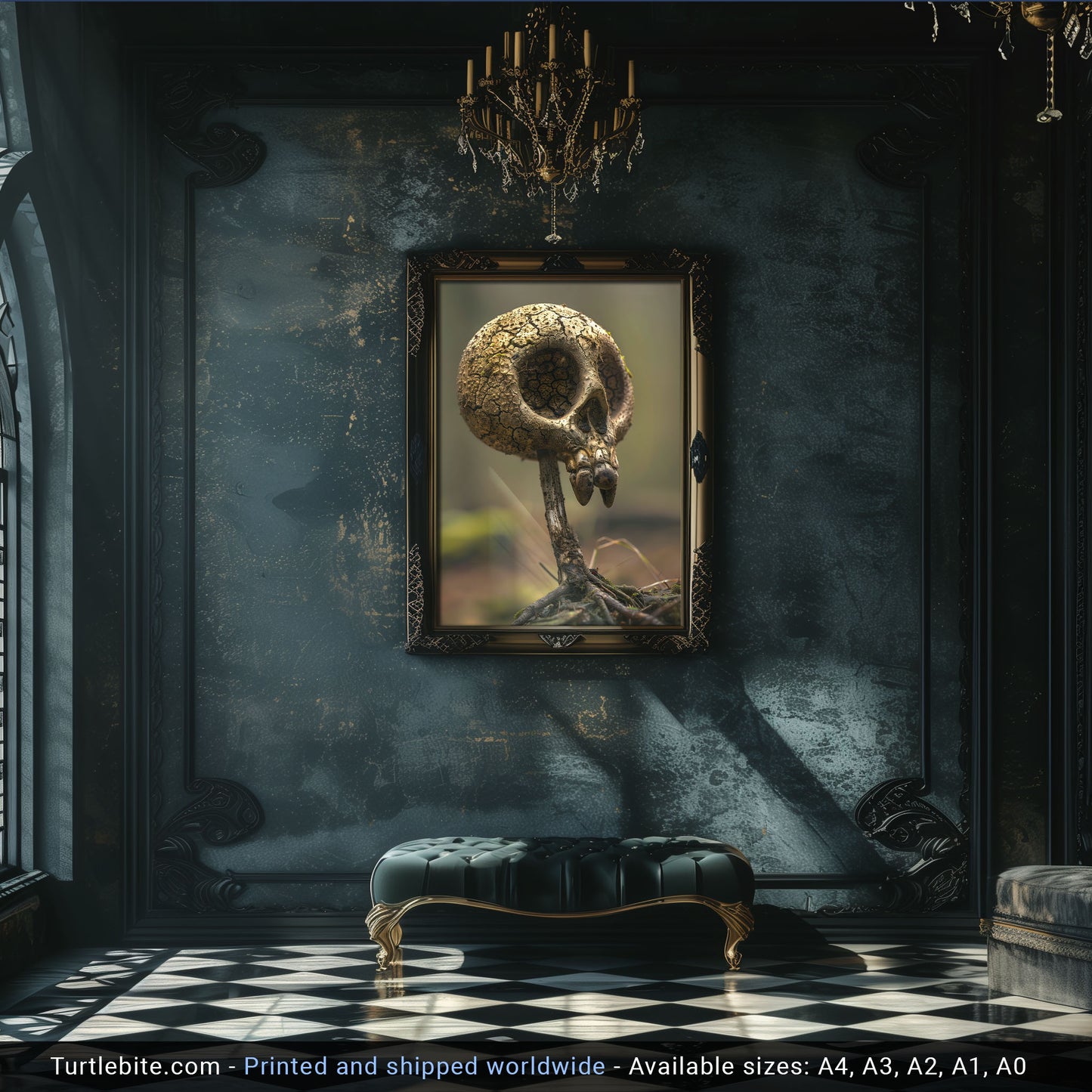
3. Bones and natural decay. Not shocking gore — found natural objects. Antlers, feathers, animal skulls discovered in the woods, dried leaves, seed pods, pressed dark flowers. The dark cottagecore relationship with death is the same as the memento mori tradition: honest rather than morbid. Nature decays. That's part of what makes it beautiful.
4. Witchy botanical elements. Dried herb bundles, pressed botanical specimens, old herbals and grimoires, spell jars filled with dried plants, dark florals in glass. The witch-in-a-cottage framing is central to the aesthetic — this is someone who knows what foxglove does and has strong opinions about it.
5. Dark forest creatures. Ravens, moths, toads, owls, foxes, deer skulls. The animals in dark cottagecore are night animals, forest animals, the ones you hear before you see. Occasionally the kind of creature that would make a reasonable person's grandmother nervous.

A dark figure in tall wild grass — witchcraft, nature, and moody atmosphere in a single image. The witchy botanical element, visualized.
6. Ritual candlelight. Beeswax candles, thick pillar candles, brass candlesticks, candelabras. The lighting in a dark cottagecore space is always warm and low — never overhead fluorescence, never cold white light. The candle isn't just decorative. It's load-bearing. If your main light source is bright and overhead, no amount of mushroom art will save the vibe.
7. Gothic nature textures. Weathered wood, dark velvet, aged linen, wrought iron, carved stone, pressed botanicals under glass domes. The materials are natural or look natural. The craftsmanship is visible. Mass-produced, perfectly uniform surfaces have no place here. Everything should feel like it has a history.
How is dark cottagecore different from regular cottagecore?
Same DNA, different expression. Both are rooted in nature, slow living, handcraft, and romanticized rural life. The differences are in tone, color, and which parts of nature they choose to romanticize.
| Cottagecore | Dark Cottagecore | |
|---|---|---|
| Color palette | Cream, blush, sage, lavender | Charcoal, deep green, burgundy, black |
| Nature focus | Sunlit meadows, wildflowers, butterflies | Misty forests, fungi, moths, bones |
| Mood | Cheerful, pastoral, whimsical | Moody, mysterious, witchy |
| Spiritual undertone | Folk magic, fairy tales, seasonal rituals | Witchcraft, herbalism, forest folklore |
| Signature art | Floral watercolor, pastoral prints | Botanical skulls, dark surrealism, forest creatures |
| The vibe is | Sleeping Beauty's cottage | The witch's house at the forest edge |
The easiest way to tell them apart: ask whether the person who lives in this space is making jam or knows 14 uses for foxglove. Both are respectable life choices.
How do you decorate a room in dark cottagecore style?
Dark cottagecore decor follows a consistent logic: everything is natural in origin, nothing is shiny or corporate, and the overall effect should feel like a space that a very knowledgeable person has been slowly filling for years. Here's how to get there.
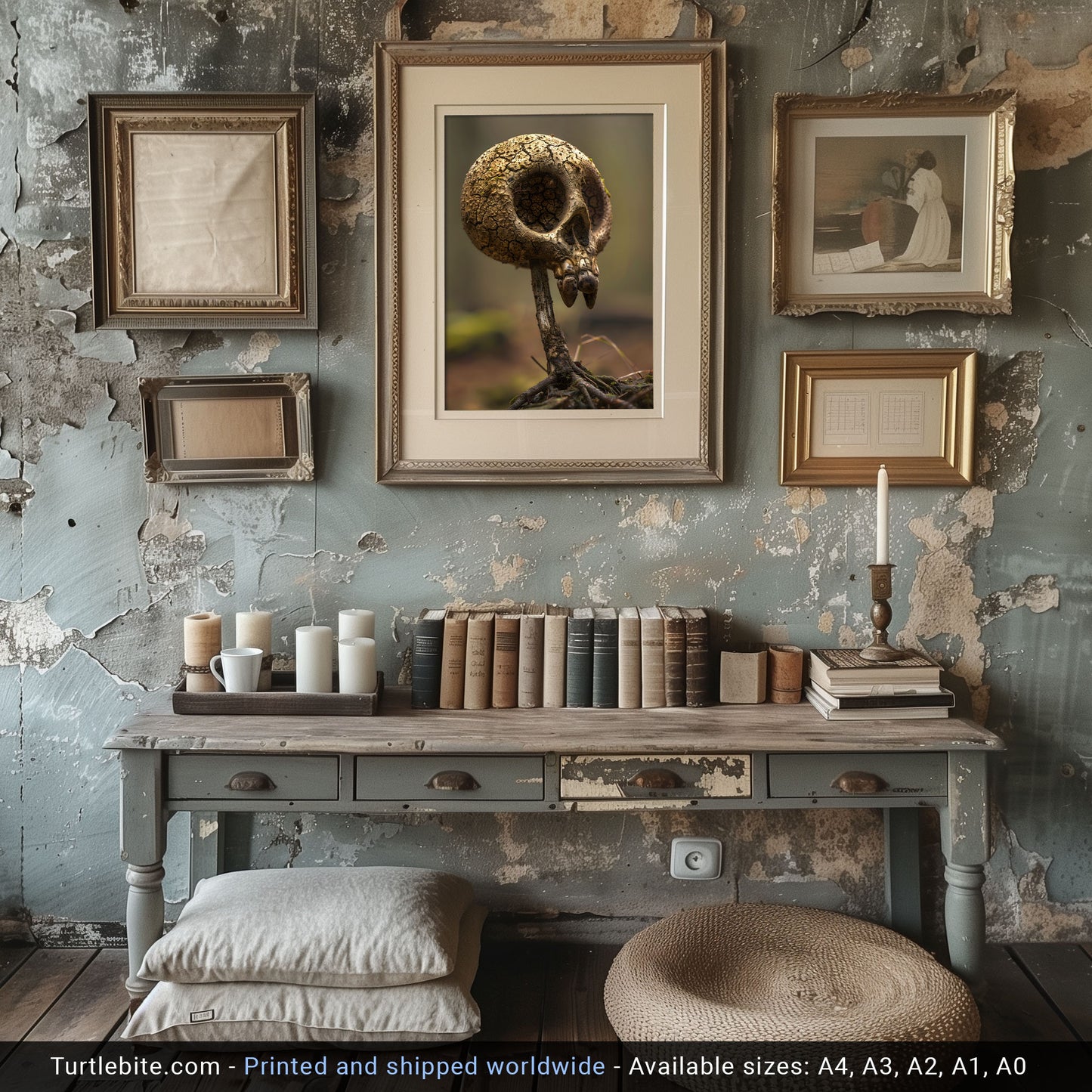
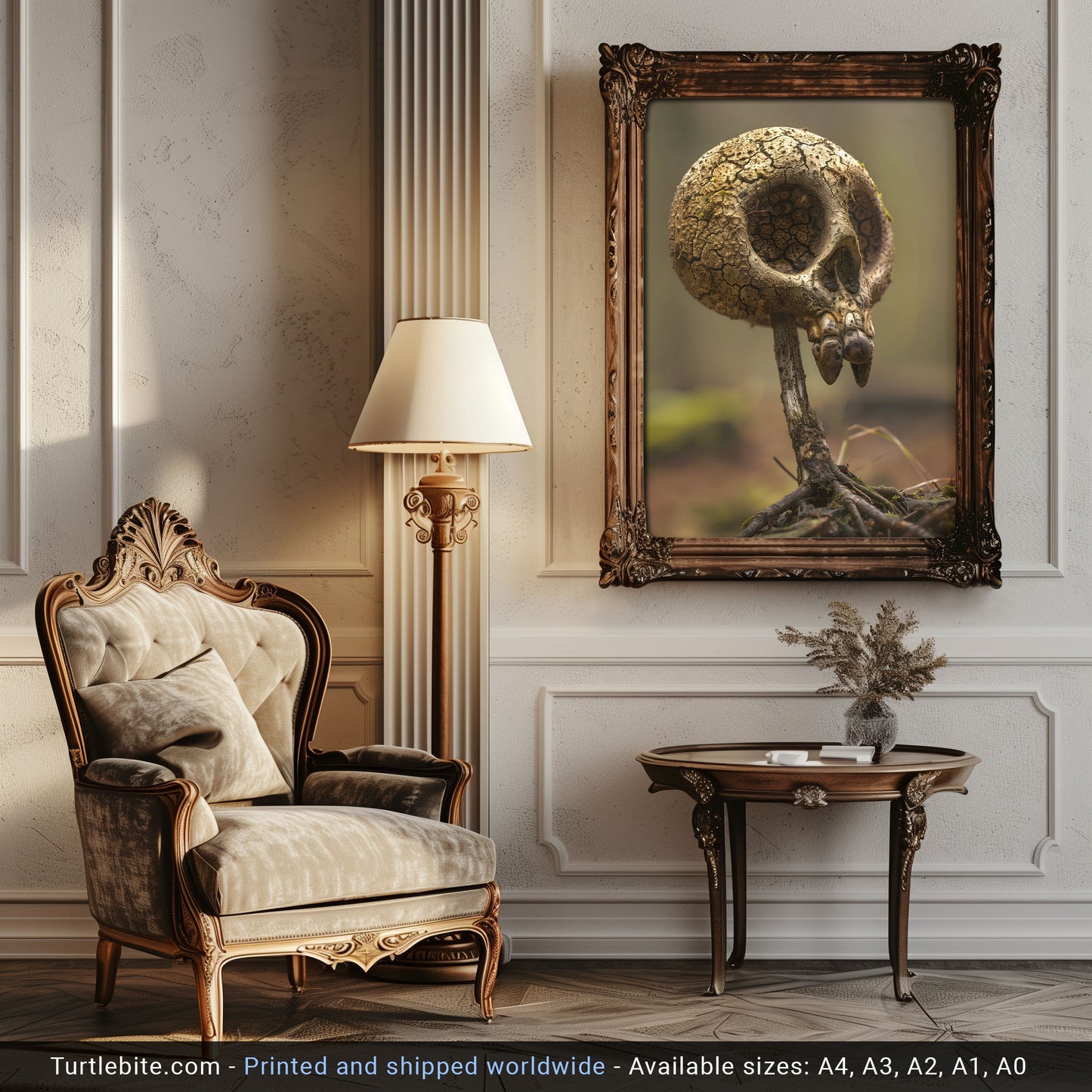
Start with the walls. This is where the aesthetic either lands or doesn't. Dark cottagecore wall art favors mushroom and forest creature prints, botanical illustrations with a gothic edge, skull art with natural elements like flowers and fungi, and anything that bridges nature and darkness. The macabre and morbid collection is a solid starting point. Whimsical surrealism with a nature theme works equally well.
Layer textures. Dark velvet cushions, aged linen drapes, a wool throw in deep forest green, a wooden tray with visible grain. Everything should feel like it has a history. Flat, smooth, uniform surfaces actively undercut the aesthetic. The more "made by hand" or "found on a walk," the better.
Add living elements. Dark cottagecore uses plants, but leans toward the strange and low-light-tolerant: ferns, pothos, dark-leafed varieties, dried herbs hanging from the ceiling, glass domes with moss or pressed botanicals. Succulents in cheerful pots are too cheerful. A glass cloche with dried flowers and a small skull, on the other hand, is always appropriate.
Get the lighting right. Candles and warm-toned bulbs only. The room should feel like it exists in perpetual golden hour on a cloudy October afternoon. If your overhead light is bright and white, start there before anything else. No amount of mushroom art compensates for bad lighting. :)

A warm-glowing mushroom against a dark background. Botanical minimalism with a dark cottagecore soul — works in a bedroom, hallway, or reading nook.
How does dark cottagecore compare to goblincore and whimsigoth?
These three aesthetics share DNA but have distinct personalities, and knowing the difference helps you actually commit to one instead of ending up with a room that looks like a mood board had a disagreement with itself.
| Dark Cottagecore | Goblincore | Whimsigoth | |
|---|---|---|---|
| Core vibe | Witch at the forest edge | Creature hoarding shiny things | Bohemian gothic fairytale |
| Key motifs | Mushrooms, herbs, bones, ravens | Frogs, rocks, bugs, found objects | Velvet, stars, tarot, soft gothic |
| Witchy element | Central | Adjacent | Present, but lighter |
| Relationship to nature | Reverent, ritualistic | Chaotic, collector's mindset | Decorative backdrop |
| Wall art style | Dark botanical, forest, gothic nature | Creatures, found-object collage | Celestial, tarot, soft gothic print |
The shorthand: if you're drying herbs and know what they're for, you're dark cottagecore. If you found a cool frog and immediately put it in your pocket, you're goblincore. If you own floor-length velvet and read tarot by string lights, whimsigoth. The categories overlap more than they'd like to admit, and nobody is policing the borders.
Frequently Asked Questions
What is dark cottagecore called?
Dark cottagecore is also called cottagegore or cottagegoth. All three terms refer to the same aesthetic: a darker, witchier interpretation of cottagecore that incorporates elements of dark academia, witchcore, and forest folklore. Cottagegore tends to emphasize the macabre side — bones, decay, dark surrealism. Cottagegoth leans toward gothic fashion and interior crossover. The terms are used interchangeably in practice.
What makes cottagecore dark?
Dark cottagecore shifts away from the cheerful pastoral imagery of standard cottagecore toward nature's stranger, more unsettling aspects: mushrooms and fungi, bones and natural decay, witchy botanicals, nocturnal forest creatures, and ritual candlelight. The color palette moves from cream and blush to deep forest green, charcoal, burgundy, and black. The mood is cozy but witchy rather than cozy and sunny.
What is the difference between dark cottagecore and whimsigoth?
Dark cottagecore centers on nature, rural life, and witchcraft in a forest cottage setting. Whimsigoth is broader — it blends gothic imagery with fairytale and bohemian elements and has a more decorative, less nature-rooted focus. Dark cottagecore means mushrooms, herbs, and the forest. Whimsigoth means tarot cards, vintage jewelry, and velvet everything. Both are genuinely good aesthetics and are entirely compatible with each other if you simply want to do both.
Is dark cottagecore still a trend in 2026?
By 2026, dark cottagecore is well past trend status — it's an established aesthetic with its own dedicated communities, creators, and visual language. Domino magazine called the moody direction of cottagecore "the style that's taking off" in late 2025. The reason it has staying power is the same reason cottagecore itself does: it's a coherent philosophy about how to live, not just a color palette that cycles in and out.
What art looks good in a dark cottagecore space?
Dark cottagecore wall art favors botanical illustrations with a gothic edge, mushroom and forest creature prints, vanitas-style skull art with natural elements like flowers and fungi, and dark surrealism rooted in nature imagery. The key is that the art should feel like it came from the natural world, even when it's strange or macabre. Bright pop art, abstract geometric work, or anything that reads as mass-produced or corporate actively undermines the aesthetic.
Ready to Build Your Dark Cottage?
Browse dark botanical, forest creature, and gothic nature prints — made for exactly this kind of space.
Browse Dark Art →4.94 stars across 272+ verified reviews. Fast worldwide shipping, produced locally near you.